
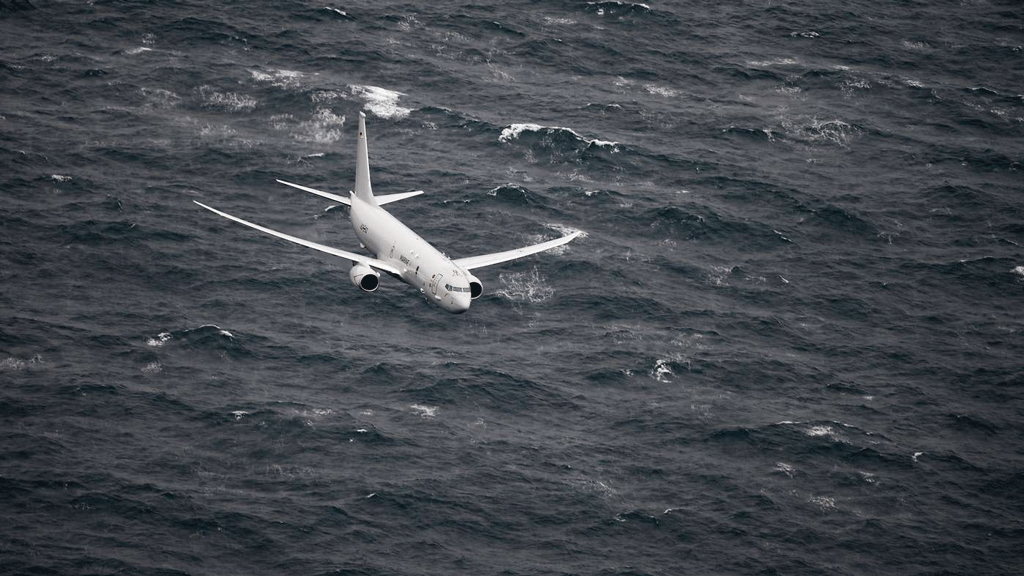
Since August 22, 2026, the naval aviators have been on site in the far north with their new aircraft for maritime reconnaissance. In association with Belgium, Denmark, France, Iceland, Norway, Poland and the USA, the state-of-the-art fixed-wing aircraft of the German Navy is supporting the Northern Viking submarine hunting exercise.
Locating submarines requires a comprehensive picture of the situation. The P-8A can deliver this because it has a long range with state-of-the-art sensor technology and passes on the collected data in real time. For precise localization, for example, it drops sonar buoys. In addition, the flying eye of the navy can be armed and support in the fight against submarines.
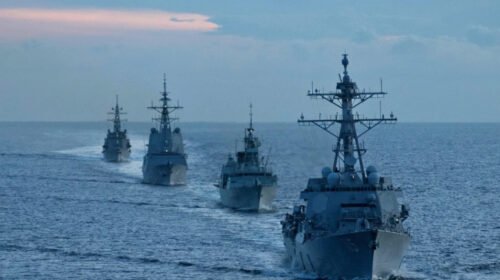
The focus of the submarine hunting training off Iceland is on detecting, pursuing and combating the danger lurking under water as well as the coordination of all participating units with each other and with international partners – on water and in the air. According to the principle: the more sensors and information, the better the result and the basis for decisions, especially in an emergency.
Coordination is everything
The importance of the Northern Viking maneuver has increased significantly due to Iceland’s geopolitical location. The objectives of the exercise are:
- Maritime Security: Focus on submarine hunting
- Airspace surveillance: Integrated air defense and interception of potential threats in Icelandic airspace
- Amphibious Operations and Coastal Defense: Marine landing and search and rescue (SAR) operations in extreme weather conditions in the North Atlantic
- Host Nation Support: Testing the ability of Icelandic civil and security agencies – including the coast guard, police and civil protection – to receive and support NATO troops
Behind the task of submarine hunting are military air and patrol missions that are specially designed to detect, track and, in an emergency, combat enemy submarines. The P-8A is a central element here. The ability to hunt submarines is particularly important for NATO in securing sea routes and naval formations. Here in the north of the alliance, Iceland is of great strategic importance with its location on the so-called GIUK gap (Greenland-Iceland-United Kingdom Gap), the interface between the Norwegian Sea and the North Atlantic.
“Train as you fight”
“The P-8A is a huge technological advancement compared to its predecessor, the P-3C Orion. The soldiers have been very well trained for the new aircraft type in recent years and have already gained a lot of experience,” says frigate captain Peter F. He is the contingent leader at Northern Viking 2026 and is responsible for the organization, flight operations and all matters on site. The Poseidon has already significantly exceeded the capabilities and capabilities of the P-3C. “Although we have only been flying the aircraft for just under a year, we are already further ahead in some areas than we have ever been with the Orion. Every maneuver helps us to consolidate this,” the contingent commander continued.
Peter F. draws an overall positive conclusion about the exercise off Iceland: “The Northern Viking 2026 maneuver was my first with the P-8A Poseidon. So, it was also a challenge for me, even though I am the technical coordinator on the aircraft. I was able to learn a lot.” Participation can already be considered a success.