
They lurk under the surface of the water, and need no food, no sleep, no detachment. The mere rumor of their presence can cause high economic damage – and if they are actually designed, they influence entire military operations: sea mines.
Little effort, big impact
If there were only a suspicion that a sea mine could be located in Denmark’s Little or Great Belt, what civilian crew would still enter the Baltic Sea and run the risk that their ship could be damaged or even sunk? The Kiel Canal would be overflowing in no time at all and the traffic of goods on the Baltic Sea would come to a standstill. The situation in the Strait of Hormuz in 2026 illustrates the drastic effects of such a scenario.
Laid in front of a port entrance, sea mines can also prevent entire fleets from leaving in the event of war. Conversely, the design of the hidden explosive charges off one’s own coast could end a landing of enemy forces before it has really begun.
The use of sea mines therefore has enormous potential. In addition, they are relatively cheap and very easy to install. Ultimately, it does not require military ships, even a fishing boat or a small merchant ship can be used to cover the explosive cargo. Once sea mines have been laid undetected, it is difficult to trace who is responsible. Thus, sea mines can quickly become a means of hybrid warfare.
Naval mine warfare involves minelaying and demining
Naval mine warfare includes both the laying of one’s own sea mines and the search for and destruction of enemy sea mines. Modern sea mines are equipped with sensors, so that the explosive device only detonates when certain types of ships overflow.
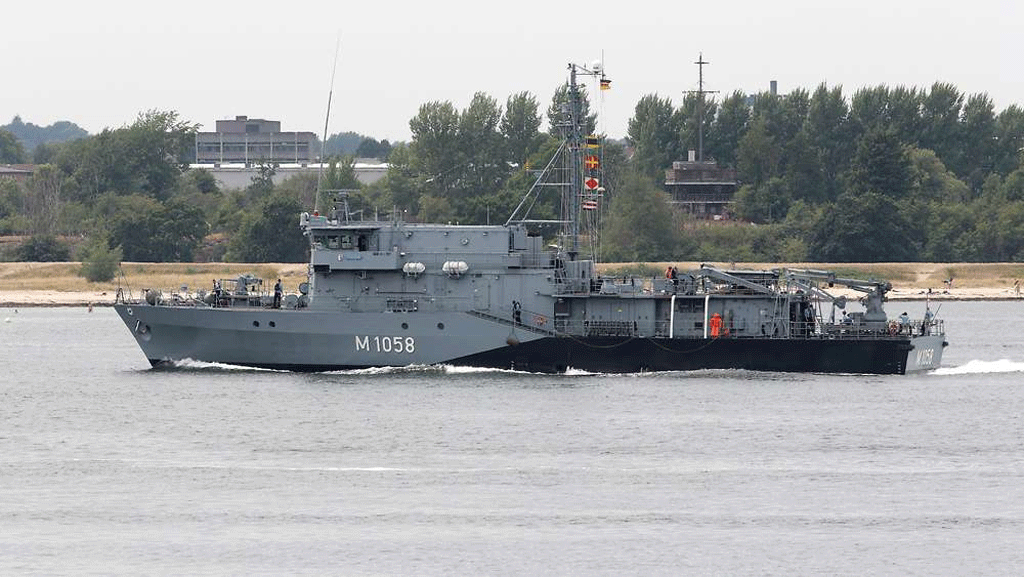
The specialists for eliminating this danger are the minehunting units and the mine divers of the Navy. With its minehunting boats, underwater drones and professional soldiers, the Bundeswehr is a mainstay of naval mine defense in NATO and in the North Sea and Baltic Sea.
But the navy is not only able to remove enemy sea mines. Many of their ships can pick up and lay mines. The Bundeswehr uses ground mines and anchor rope mines – the most common types of sea mines worldwide.