
On August 3, the Navy conducted a combat experiment with Hanwha Systems, utilizing advanced civilian technology in the AI field, on the Navy’s base in Busan.
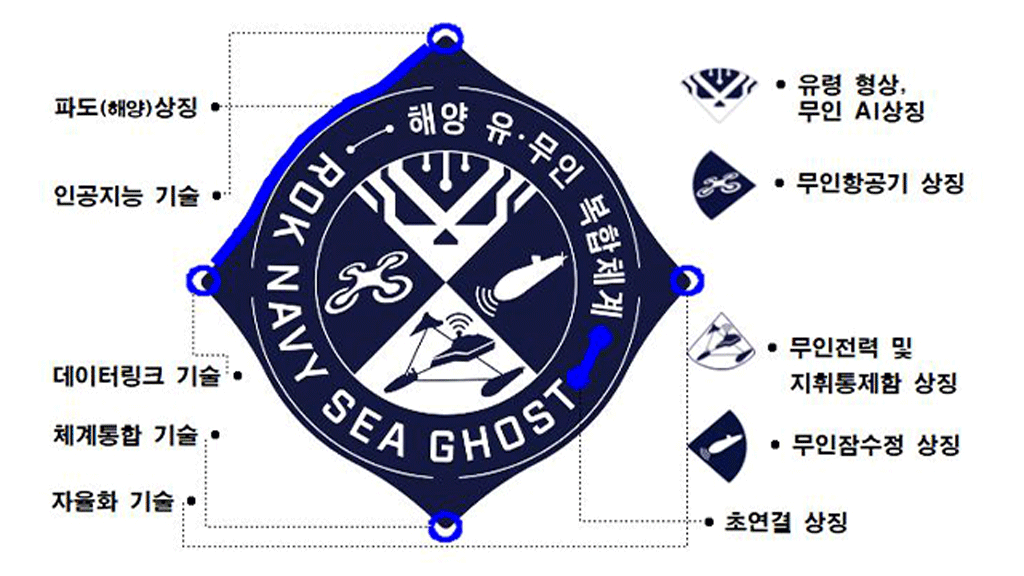
This combat experiment was conducted in conjunction with the Navy’s ongoing maritime complex combat system, ‘Navy Sea GHOST,’ to confirm the future direction of anti-ship warfare development and the potential for AI and drone systems in maritime operations.
The combat experiment involved the deployment of a submarine, an anti-ship and surveillance drone, two unmanned surface vessels, and one underwater autonomous missile detection system, and sequentially verified the AI-based mission plan, unmanned system integration operations, anti-ship warfare detection and analysis, and damage control procedures.
Admiral Gwak Kwang-seob (ret.) said, “AI technology and unmanned systems will be the core of future maritime warfare, and we must lead the future battlefield through the rapid military use of advanced technology.” He added, “We will quickly introduce AI technology at the Busan AX base and expand cooperation among civilians, the military, and the government to enhance our maritime warfare capabilities through various combat experiments.”
The Navy plans to actively integrate advanced AI technology and unmanned systems into maritime operations in the future, and to strengthen operational capabilities for future maritime warfare through continuous combat experiments in cooperation with civilians, the military, and the government.