
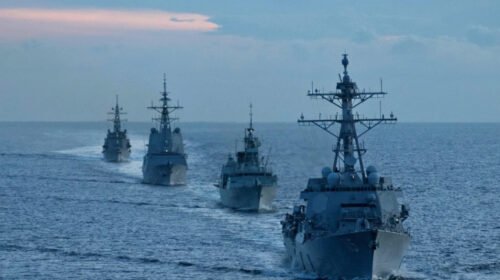
The Naval Action Force deployed for the first time an anti-submarine warfare (ASW) detachment composed of ASW specialists from the multi-mission frigate (FREMM) Bretagne A and glider pilots from CENTEX FAN during the NATO exercise Repmus ( Robotic Experimentation and Prototyping using Maritime Uncrewed Systems ) at the Troia base in Portugal.
The Repmus 26 edition brought together more than 3,700 participants representing the naval forces of 36 countries. This large-scale exercise provided an operational testing environment for approximately 300 drones of all types: aerial drones (unmanned aerial or UAV), surface drones (unmanned surface or USV) and underwater drones (unmanned underwater vehicles or UUV).
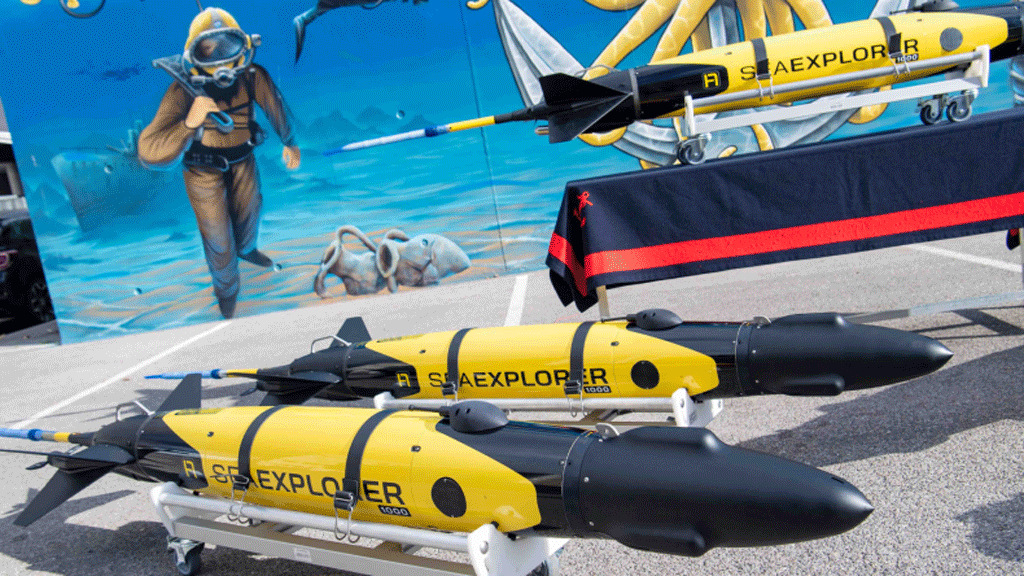
This French LSM team was equipped with 4 underwater gliders recently acquired by ALFAN from the company Alseamar and its mission was to assess the degree of maturity of the technology with a view to opening a new field for anti-submarine warfare (ASW) operations based on these French UUVs.
For nearly two weeks, this detachment participated in the integration of the French Naval Forces’ (FAN) new capabilities in a real-world, inter-allied naval drone engagement during 17 exercises followed by 48 hours of live, drone-based LIVEX (Live Exit) activities. The FAN gliders were thus piloted autonomously by French sailors in demanding operational scenarios against other types of UUVs (Unmanned Aerial Vehicles) capable of credibly simulating a submarine for both active and passive detection.
One of the major challenges of this edition was developing interoperability between the UAVs, USVs, and UUVs of the participating NATO nations and testing the ability to conduct multi-domain operations using autonomous systems. This interoperability is only possible if these drones and those who operate them (command and control (C2) centers located at sea or on land) speak the same language (STANAG in the inter-allied jargon) to exchange the tactical information necessary for conducting anti-submarine warfare (ASW) operations.
By successfully applying STANAG 4817, the four French gliders demonstrated their ability to:
- To integrate into a joint allied ASW barrage in cooperation with other types of UUVs, as well as sonar-equipped USVs and LSM-equipped UAVs
- Transmitting tactical information to the Common Operational Picture (COP), the situation of all NATO assets.
By offering significant range, these UUVs act as remote sensors that can operate far from the host vessel to create a sensor network. Gliders can thus autonomously cover large operational areas and provide the naval force with a crucial capability for detecting underwater threats as early and as far away as possible.
During Repmus 26, the FREMM Bretagne A and the CENTEX FAN showcased French expertise in the field of anti-submarine warfare and demonstrated the strong interest of the French Navy in the use of drones in ASW.
The operational use of naval drones by combat vessels is among the major priorities set by ALFAN for its units.
These gliders, weighing around 60 kilograms and with an operating range of approximately four weeks, are not powered. They move by changing their depth via a system that adjusts their buoyancy (a hydraulic system) and fixed wings that allow them to glide underwater. The drones thus follow a sawtooth trajectory between the surface and depths of up to 1,000 meters.