
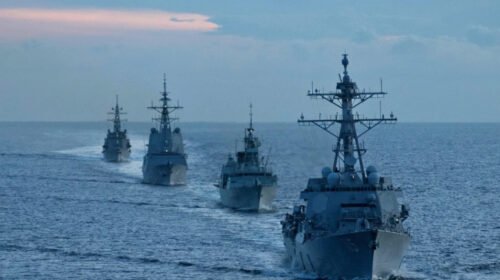
BALTOPS 2026, the 55th edition of the annual Baltic Sea naval maneuver, began in Gdynia, Poland, at the beginning of June. Under the leadership of the U.S. Navy, around 6,000 soldiers train with twenty ships from fifteen nations. The NATO military exercise lasts two weeks and traditionally ends at the start of the Kiel Week in Kiel.
The large-scale multinational maneuver BALTOPS is not only an expression of good unneighborly cooperation between the Baltic Sea states but has become a strategic necessity. The Baltic Sea is increasingly the scene of hybrid attacks as well as acts of sabotage on, above and underwater. The maritime critical infrastructure of Germany and its allies is increasingly being spied on and damaged. And unmanned vehicles are also being used increasingly often. All this and the threat of a military conflict with Russia require a timely response from the alliance.
This is how BALTOPS succeeds: with firepower and a mix of abilities
The German Navy is flying the flag and striking power at the NATO exercise BALTOPS 2026: with the frigate “Sachsen-Anhalt”, the corvettes “Braunschweig” and “Erfurt”, the submarine “U 34” and a P-8A Poseidon maritime reconnaissance aircraft. With the Commander Task Force Baltic – CTF for short – in Rostock, she is also once again taking on a leadership role.
The decisive factor for success in an emergency as well as in the exercise is that the partners involved contribute a wide range of skills and that the cooperation works smoothly. The maneuver mainly includes combat and supply ships. Unmanned systems are now also increasingly being used: “All BALTOPS units increase NATO’s presence in the sea area and thus also support NATO’s Baltic Sentry activity. Ships, boats and naval aviators as well as unmanned systems will be used,” said Rear Admiral Stephan Haisch, Commander of Task Force Baltic.
Protecting maritime routes and critical infrastructure
BALTOPS has two maritime priorities: ensuring free maritime traffic in the Baltic Sea and demonstrating a robust deterrent potential – on, above and below water. The exercise scenario covers all aspects of national and collective defense. This also includes operations to combat international terrorism in the maritime area. At the same time, the joint training is emblematic of a task that goes beyond the Baltic Sea: the joint safeguarding of the entire strategic sea communication lines from the American East Coast to the Baltic States.