
By Olivia Parker and Dzaky Naradichiantama
IISS
China has made and continues to make great strides in its carrier aviation. Comparing the PLAN’s practices with those of the US Navy provides a new perspective on the development of the Chinese carrier program.
Chinese President Xi Jinping became Chairman of the Chinese Communist Party (CCP) and Central Military Commission in November 2012, two months after the People’s Liberation Army Navy (PLAN) commissioned its first ever aircraft carrier, the Liaoning. Since then, two additional carriers have been commissioned, with more planned.
Aircraft-carrier development has become a highly visible and prestigious part of China’s military modernization under Xi’s leadership. The importance of carrier aviation within the PLAN has consequently grown over this period. Over the past few years land-based aviation units have been transferred from the PLAN to the PLA Air Force in order to enable this focus, signaling the prioritized development of carrier aviation capabilities. This priority is evident in the number of new carrier aviation units and the shifting curriculum of carrier training. However, the role of pilots in the running and administration of the PLAN and the joint service remains less certain.
The similarities and differences between Chinese and American perspectives on these issues offer interesting insight. The United States, as the premier carrier operator, provides a baseline against which to compare China’s current developments.
Carrier air wing
Historically, the US carrier air wing formed the main strike package of the United States’ carrier strike group (CSG). The PLAN, in contrast, historically hampered by restricted range owing to limited onboard aerial refueling and constrained command-and-control, split this responsibility between the Chinese carrier task group’s air wing and surface vessels.
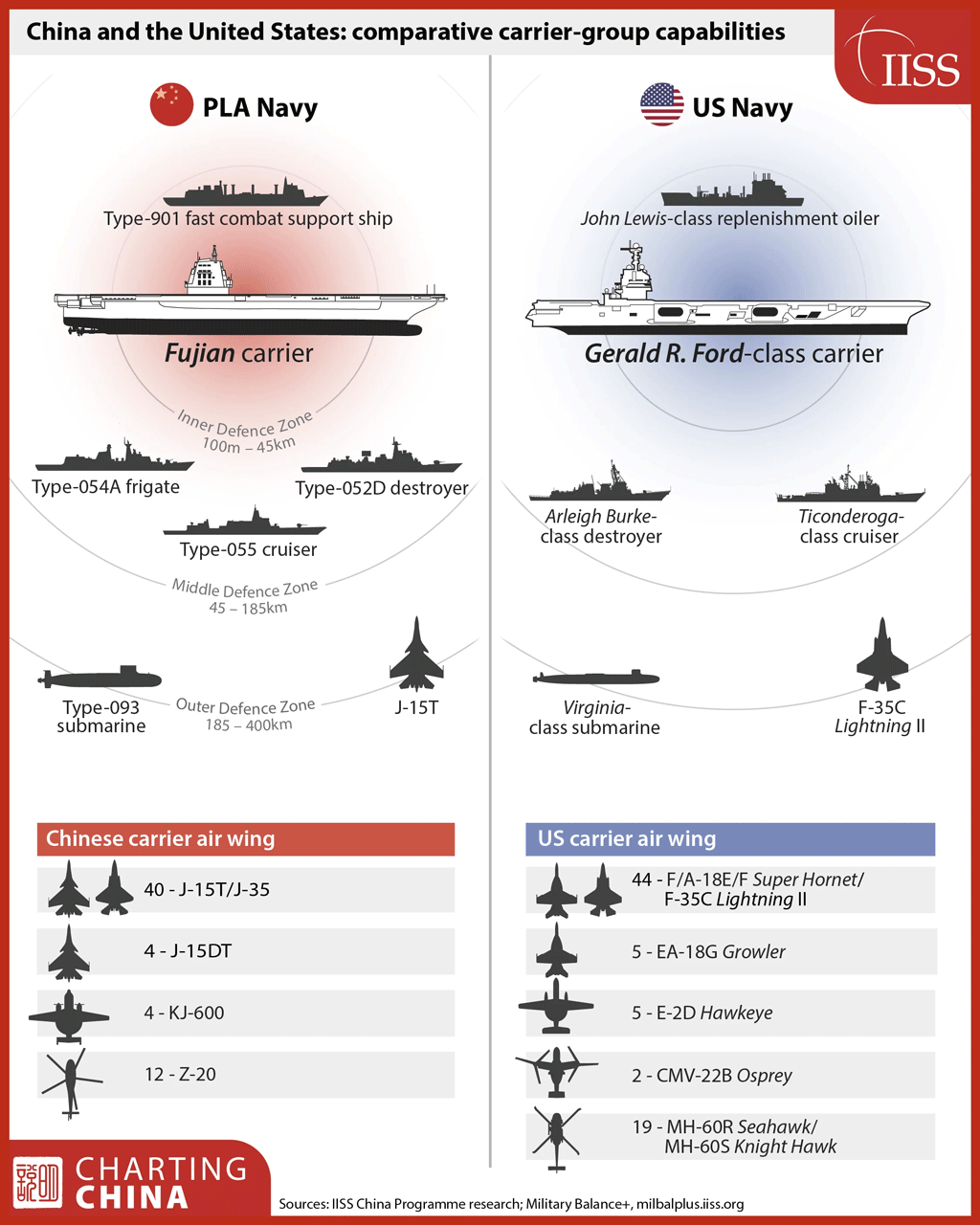
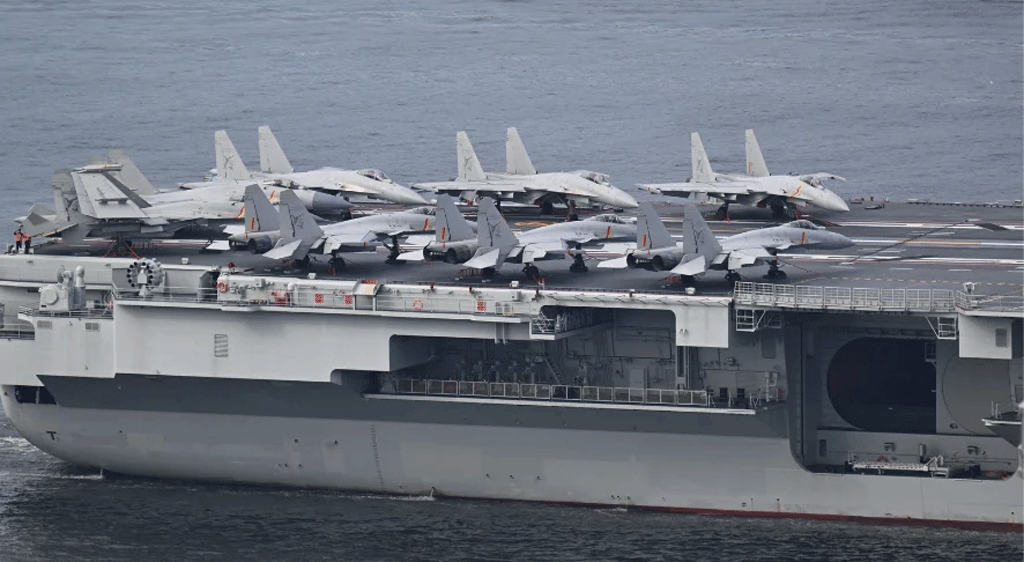
Nevertheless, the Chinese carrier air wing continues to grow and modernize with each successive carrier. The carrier Fujian boasts the PLAN’s largest carrier air wing to date (see Figure 1). Low-observable combat aircraft, catapult-assisted multi-role combat aircraft, electronic-warfare aircraft, airborne early warning & control aircraft and anti-submarine warfare (ASW) helicopters now comprise its air wing. These aircraft types form the ‘five essentials for … carriers’ and share many similarities with a US carrier air wing.
More recently, the PLAN has begun testing the GJ-21 uninhabited combat aerial vehicle for carrier operations, suggesting a future combat role for uninhabited platforms aboard carriers. The US has also tested the MQ-25 Stingray aerial refueling uninhabited aerial vehicle, with the US Navy’s Distributed Maritime Operations (DMO) concept emphasizing the importance of uninhabited platforms. Recognizing the increasingly contested environment and the greater threat that anti-ship missiles pose against vessels, US naval planners introduced DMO. Under DMO, vessels are to operate at greater distances from one another, with sensors and weapons more widely distributed among vessels and aircraft, in effect making it harder for adversaries to detect and target units. Ironically, this could see the carrier air wing no longer acting as the primary strike package of the CSG, paralleling current Chinese practices.
Training
With decades of experience of operating carriers, the US Navy has enshrined practices and policies within its many Naval Air Training and Operating Procedures Standardization manuals intended to minimize the challenges and dangers associated with carrier aviation operations. Meanwhile, the PLAN has, over the past two decades, sought to overcome these same challenges and at pace, in hopes of quickly realizing an effective and capable carrier force.
One source for examining the development of carrier training is the PLA Daily, which highlights key training narratives from all services and forces. Since the commissioning of Liaoning, there has been a notable increase in reports covering PLAN carrier aviation. Between October 2025 – a month before the Fujian’s commissioning – and present, more than 20 pieces on PLAN aviation training have been published, compared to nine after the Liaoning.
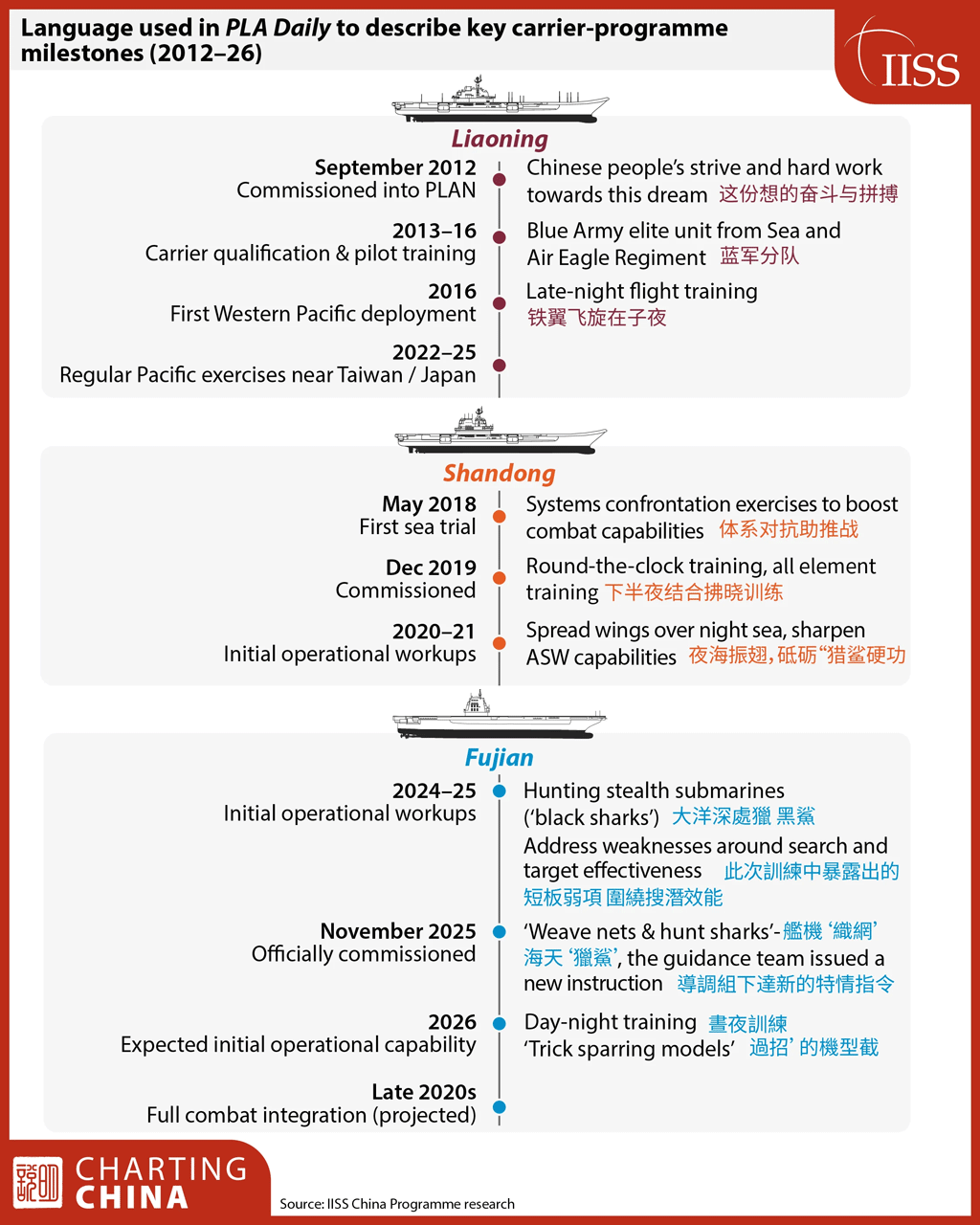
The PLA Daily has frequently used the phrase ‘hunting black sharks’ in reference to ASW operations which also involve combat-readiness training involving the J-15 carrier fighter plane. One interesting development is the shift in carrier training from night to ‘around the clock’ operations, as seen in Figure 2. PLA Daily reporting from 2015 highlighted the initial difficulty of night training in ‘actual combat’ training. Meanwhile, in 2017, further reporting highlighted that the PLAN was still overcoming challenges with night-time take-offs and landings, and it was not until 2020 that the PLAN conducted its first night-time aerial refueling mission.
The PLAN Carrier Aviation Test and Training Base, created in 2013, likely oversees all carrier pilot training. The base may have contributed to improved night-time operational capabilities. Its former commander was seemingly a pioneer in simulated night-time carrier landings and was awarded a First-Class Merit in National Defense Science and Technology for developing a new night-time carrier-landing simulator. Now, commonly published exercises include day–night operations in combat conditions.
Beyond night operations, another recent development is cross-academy combat training between the PLA Naval Aviation University (formed from the merger of the Naval Aviation Academy and the Naval Aviation Engineering Academy in 2017) and the Dalian Naval Academy, reported on by Chinese sources for the first time last year. Some published stories discuss work on joint training elements, such as vertical replenishment, helicopter in-flight training and multi-aircraft collaboration with search and rescue operations.
This development in joint readiness highlights the PLA’s goal to produce cross-posting instructors and students and move away from the concept of them remaining in a single training establishment, as well as spreading carrier aviation knowledge throughout the force. With more pilots trained simultaneously, cross-academy integration reduces dependence on a handful of pioneer aviators.
Education
Reports suggest that initial carrier-based pilot training is now conducted by a unit of the Naval Aviation University, implying that new pilots undergo carrier training before officially earning their wings. Previously, the first cadres of carrier pilots were not fresh pilots, but rather experienced ones, specially selected from front-line navy and air-force units for their skill and achievements. In contrast, US Navy pilots are trained from scratch; however, they too, historically, underwent carrier training before earning their wings. Since 2025, US Navy pilots have undergone carrier training at their Fleet Replacement Squadrons after commissioning as officers and “earning their wings.”
For PLAN pilots to earn their wings, they must first go through technical and theoretical study at the Naval Aviation University. As a broader officer-commissioning academy, the US Naval Academy focuses on professional naval education combined with undergraduate education. Meanwhile, the Naval Aviation University is more technical, emphasizing military science and operational training. At the same time, most PLA personnel leave academies with their party education already completed, becoming members of the CCP. Pilot cadets found unsuitable for training on political, ideological, or disciplinary grounds will be returned to their respective hometown or institution and required to reimburse all training costs.
After completing the academy, PLAN trainees transition to land-based training, followed by carrier-based training. The third phase consists of cadets fully assigned to carrier-borne aviation units and embarking on more diverse training concepts, such as fighting in challenging weather conditions. After two to three years of technical and basic tactics in the primary combat aircraft, they are eligible for their ‘wings’ award. In the US, after officer development, pilots receive an introduction of flight exposure, baseline training and advanced placement at Naval Air Station Pensacola, Florida. The US conducts six naval aviator pipelines, and after an average of 18–24 months, naval aviators receive their ‘Wings of Gold’.
Other key differences are the age requirements for commissioning. For the US, pilots must be between 19–32 years old. For the PLAN, high school applicants must be between single, aged 17–20, and academy graduates must not exceed 24. This restriction has hindered the recruitment numbers for the PLAN aviation branch.
One benefit of attending Chinese military academies is that they provide more options and flexibility for students to study their desired degree, unlike other public universities, where their entrance exam, the Gaokao, determines eligible degrees. Each academy has a different score threshold, with Naval Aviation University being 503/700. This places the academy in the upper-middle tier in terms of education level, along with the Naval Engineering University.
Career progression
There is precedent within the US Navy for naval aviators to reach four stars and they often serve as Chief of Naval Operations or commander of a unified combatant command. In contrast, their Chinese counterparts have had comparatively less prolific careers. Despite the long history of PLAN aviation, only one pilot has served as Commander of the Navy at the Military Region/Theatre Command Leader grade. No naval pilot has commanded a Military Region or Theatre Command, as of writing.
The grade system is integral to the PLA’s overall organization and command, even more so than the rank system. Grades denote the unit and unit commander’s placement within the organizational and command hierarchy of the PLA. However, the highest grade that PLAN pilots typically reach is Theatre Command Deputy Leader. Billets held at this grade include Deputy Commander of a Theatre Command, Deputy Commander of the Navy, and Commander of a Theatre Command Navy, among others. Some reports suggest that a current Deputy Commander of the Navy, a pilot by training, is being considered for the top job after the removal of the previous commander; however, this remains unconfirmed.
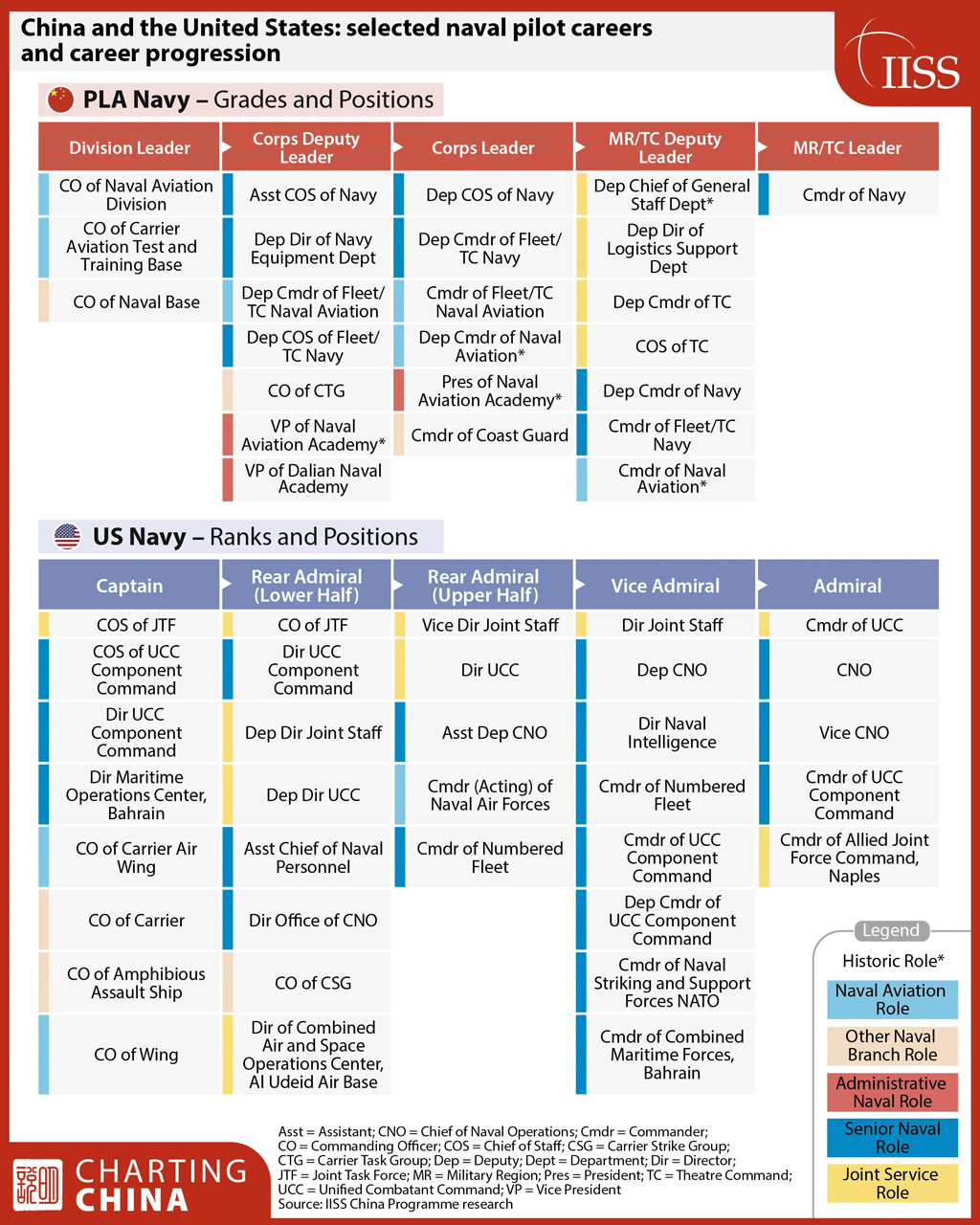
Among the most notable naval pilot careers is that of the first carrier pilot to land a J-15 on a carrier. Prior to his selection as a carrier pilot, he served as a naval aviation squadron commander. After selection and training, he is known to have served as deputy commander of the Carrier Aviation Test and Training Base around 2013 and as commander thereafter in 2015. In 2019, he was promoted to Deputy Commander of Theatre Command Naval Aviation and in 2021, he became the Commander of the Shandong carrier task group, making him the first carrier pilot to command such a formation. It is likely he became the Commander of Theatre Command Naval Aviation before being promoted to Vice Admiral in 2026.
The sample of officer pilots in Figure 3 includes senior naval and joint service personnel, as well as members of the “Pilot-Captain Class,” a program intended to create a new class of carrier commanders by retraining pilots as surface-warfare officers. They will go on to occupy a variety of roles on surface vessels and naval formations, including as Chief of Staff, Deputy Commander, and Commander of frigates, destroyers, naval squadrons and naval flotillas.
The careers of these nine graduates vary significantly, but only one individual reached the senior billet of Deputy Commander of the Navy. Additionally, only one individual from this class was reported to have been considered for command of a carrier, but this never came to fruition. Known carrier commanders have instead come from the surface-warfare branch. In contrast, the US Navy’s carriers are typically commanded by naval aviators and naval flight officers. However, it remains unclear how long an individual stays in command of a carrier or a carrier task group in the PLAN, though one individual is known to have commanded both the Liaoning and the Shandong’s carrier task group.
Fragmentary evidence suggests that, like in the US Navy, the commander of the carrier task group, at Corps Deputy Leader, outranks the commanders of the carrier and the carrier air wing. Carrier commanders are typically at the Division Leader grade, while carrier air-wing commanders’ grades remain uncertain. Moreover, the exact command structure of the task group – including how the decision-making by committee system with its political commissars and multiple deputy commanders functions within this structure – remains unknown.
Outlook
The following decade is likely to be pivotal for the development of PLAN aviation. Based on reporting from the US Department of War, the PLAN plans to commission nine more aircraft carriers by 2035 and is reportedly working on its first nuclear-powered flat top, the Type-004. As it advances towards becoming a major carrier operator, the force still faces several issues in recruitment and training. As China faces demographic headwinds, and competitive benefits from the civil aviation industry for pilots, the PLA faces constraints in recruiting and developing more technically skilled individuals. The PLA is combatting this issue by lowering the requirements to join and expanding its base to train female pilots. However, given how recently the PLAN began developing carrier aviation capabilities, the central issue for the force moving forward may continue to be its limited institutional experience and the requirement to develop these capabilities at pace.