
By Madan Veluvolu
To most people, the sea is just water stretching beyond the horizon. But under international maritime law, every nautical mile carries a different meaning, different rights, and different responsibilities.
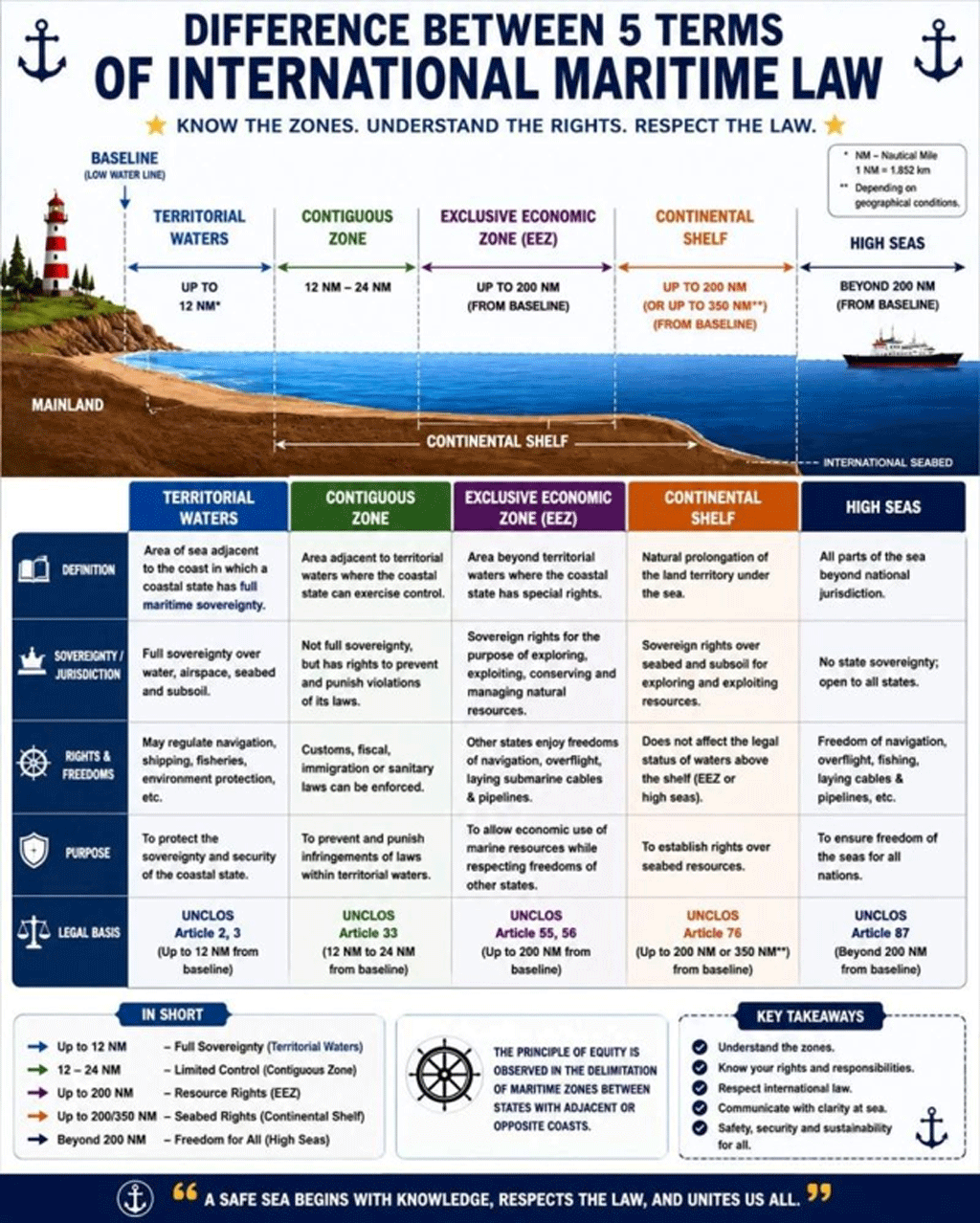
- Territorial Waters (12 NM): A nation’s sovereign territory at sea.
- Contiguous Zone (24 NM): Where coastal states can enforce customs, immigration, and security laws.
- Exclusive Economic Zone (EEZ – 200 NM): Resource rights without full sovereignty.
- Continental Shelf: Rights over the seabed and its natural resources, sometimes extending beyond 200 nautical miles.
- High Seas: The shared waters of humanity—free for navigation and beyond the jurisdiction of any single nation.
Understanding these maritime zones isn’t just for lawyers and diplomats. They shape global trade routes, fishing rights, offshore energy exploration, environmental protection, and even geopolitical tensions around the world.
The ocean may look borderless, but the law draws invisible lines that influence the fate of nations.
Know the zones. Understand the rights. Respect the law. Because every mariner should know where sovereignty ends—and where freedom of the seas begins.