
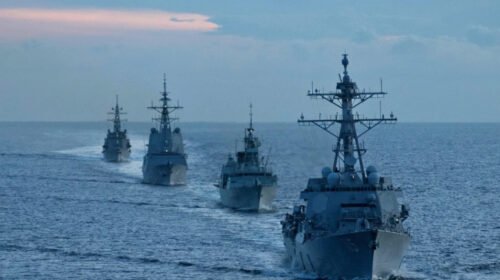
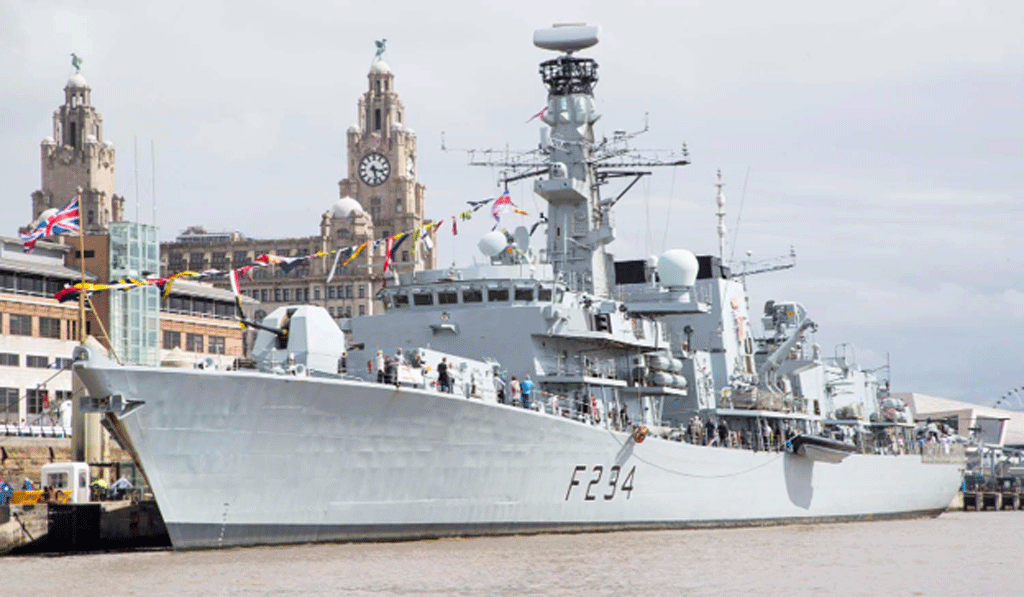
The Royal Navy is marking a significant moment in its evolution as HMS Richmond, HMS Iron Duke and HMS Chiddingfold prepare to leave service after delivering more than a century of combined operational excellence.
As the Royal Navy modernizes its fleet, older Type 23 frigates are being retired as the cost and risk of maintaining them continues to increase. Retiring them now allows reinvestment in the next generation of Type 26 and Type 31 frigates and advanced autonomous capabilities.
For over three decades, the three ships have been at the forefront of maritime security, supporting UK interests around the globe and demonstrating the Royal Navy’s enduring ability to operate wherever and whenever required.
From countering submarine threats and safeguarding vital shipping routes to humanitarian relief efforts and global maritime security missions, the ships have consistently helped protect the UK’s security, prosperity and international partners.
“HMS Richmond, HMS Iron Duke and HMS Chiddingfold have each played a key role in safeguarding the UK’s security and interests worldwide. As they retire from service, their legacy continues through the next generation of warships and advanced autonomous systems.
This marks a significant step in the Royal Navy’s evolution towards a Hybrid Navy, combining cutting-edge technology with proven capability to meet future maritime challenges.
We honor their service and look forward to the advantage the future fleet will provide.” – said Vice Admiral Steve Moorhouse, Fleet Commander.
Most recently, HMS Richmond played an important role in the UK Carrier Strike Group’s deployment to the Indo-Pacific in 2025, providing protection and reassurance alongside HMS Prince of Wales on one of the Royal Navy’s most ambitious global deployments.
HMS Iron Duke also continued to make a vital contribution. Recently, the frigate has been one of the Fleet’s most frequently tasked vessels, conducting repeated operations to monitor and track Russian warships approaching areas of national interest.
Meanwhile, minehunter HMS Chiddingfold has spent much of the past two decades supporting maritime security in the Middle East, operating from Bahrain alongside allies and partners to ensure freedom of navigation through some of the world’s busiest and most strategically important waterways.
While these ships leave service with distinguished records, their retirement also reflects the Royal Navy’s ongoing transformation to meet future challenges.
HMS Richmond’s anti-submarine warfare role will be carried forward by the next generation of Type 26 City-class frigates, led by HMS Glasgow, bringing enhanced capabilities for operating in increasingly contested environments. HMS Iron Duke’s responsibilities will transition to the Type 31 Inspiration-class frigates currently under construction, delivering greater flexibility and operational capacity for a wide range of global tasks.
For mine warfare, HMS Chiddingfold’s legacy will continue through the Royal Navy’s pioneering autonomous and remotely operated systems. These technologies are already being deployed and tested operationally, enabling mine-countermeasure missions to be conducted more effectively while significantly reducing risk to personnel.
The Royal Navy is transitioning to a Hybrid Navy, supported by the Defence Investment Plan’s £1.3 billion for the hybrid fleet and £1.1 billion for the Mine Hunting Capability program. This will combine autonomous systems with next-generation warships, aircraft, submarines, and uncrewed platforms to boost reach, resilience, and operational advantage.
As HMS Richmond, HMS Iron Duke and HMS Chiddingfold leave service, they do so having helped shape the future Fleet, passing the torch to the advanced capabilities that will protect the UK’s interests for decades to come. Their legacy lives on not only in their achievements, but in the sailors, technology and fighting power that will carry their mission forward into a new era of maritime operations.