
By Kelsey Chadwick
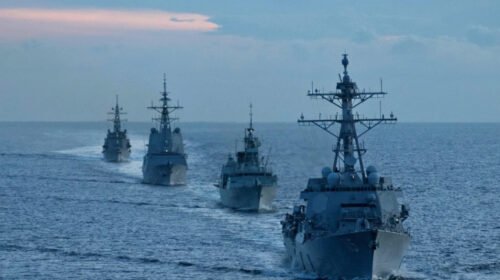
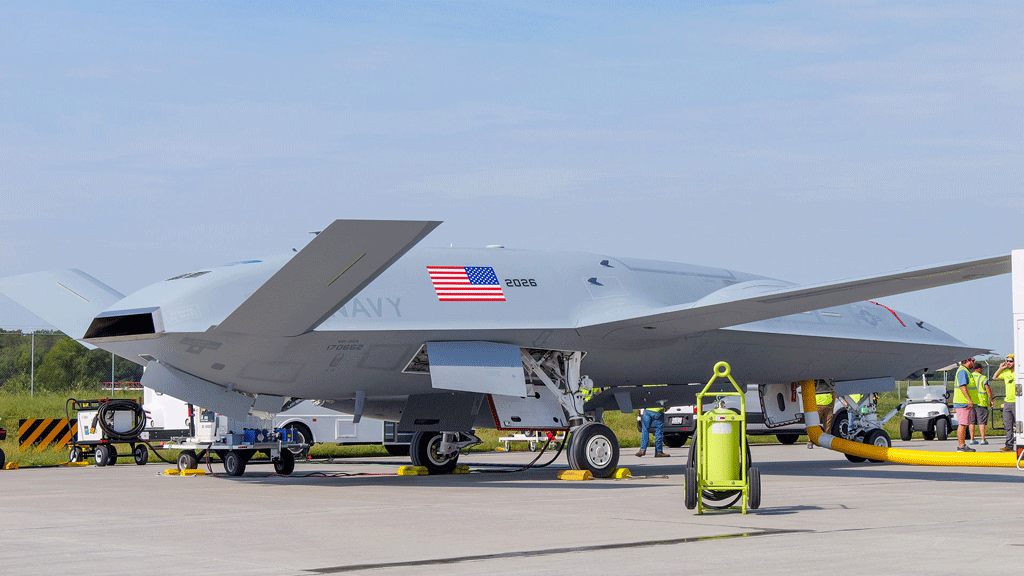
The Boeing, U.S. Navy and Lockheed Martin MQ-25 Integrated Test Team (ITT) established a beyond-line-of-sight (BLOS) satellite command-and-control (C2) link between the MQ-25A Stingray and a production MD-5C control station aboard USS Ronald Reagan while the ship operated at port and at sea.
- The importance of this test was to validate an end-to-end BLOS C2 capability over the Navy’s operational command, control, communications, computers, and intelligence network (C4I) so shipboard teams can reliably monitor and command the MQ-25A from an aircraft carrier.
Why it matters: For the first time, the aircraft was controlled from a carrier using the ground control station and Navy communications network used in operational missions, demonstrating an end‑to‑end capability for future carrier operations.
How it works: The MQ-25A on the ground at MidAmerica St. Louis Airport used a Skyhook antenna to connect with the SpaceX satellite constellation.
- Through U.S. Navy spaceborne and terrestrial networks, command and control protocols were routed to the MD-5C control station aboard USS Ronald Reagan.
- Navy air vehicle pilots aboard the ship monitored system status and, following a formal handoff from the MidAmerica control team, assumed control of the MQ-25A to perform a series of operational checks.
- The pilots then handed control back to the MidAmerica team to conclude the event.
What they found: The tests at port and at sea established a sustained BLOS link, enabled a safe handoff and hand back between ground and ship teams, and demonstrated command latency and link integrity consistent with operational requirements.
What’s next: This demonstration is one in a series of buildup exercises designed to validate procedures, networks and interfaces ahead of a risk reduction flight-test program that will include carrier at-sea operations.