
The specialist minehunting ship the UK dispatched to help re-start shipping through the Strait of Hormuz has arrived in the Middle East.
Packed with around half a dozen leading edge autonomous, crewless, and remotely operated systems, RFA Lyme Bay safely passed through the Red Sea.
The ship – crewed by more than 270 personnel: a combination of Royal Fleet Auxiliary seafarers, over 100 Royal Navy mine warfare and diving/explosive ordnance disposal experts, plus medics, Royal Marines, British Army soldiers and French sailors – has been quickly converted into a ‘mothership’ to accommodate and operate a string of new systems and craft as part of a proposed multi-national effort to render the gateway to the Gulf safe for merchant traffic to pass.
Leading the effort for the UK is Commander Gemma Britton Royal Navy, Commander United Kingdom Mine Countermeasures Force. She said “A huge number of people from across Defense and industry have worked exceptionally hard over the past few weeks to bring together experts and cutting edge mine detection and clearance technology on to Lyme Bay.
“We have trained hard and are enormously keen to utilize our skills on live operations that have such significance, not just to families and friends at home, but around the globe. This will be a multinational effort; the Royal Navy is ready to deliver.”
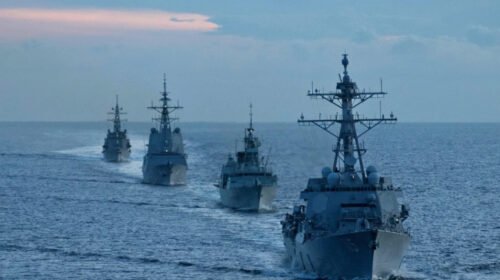
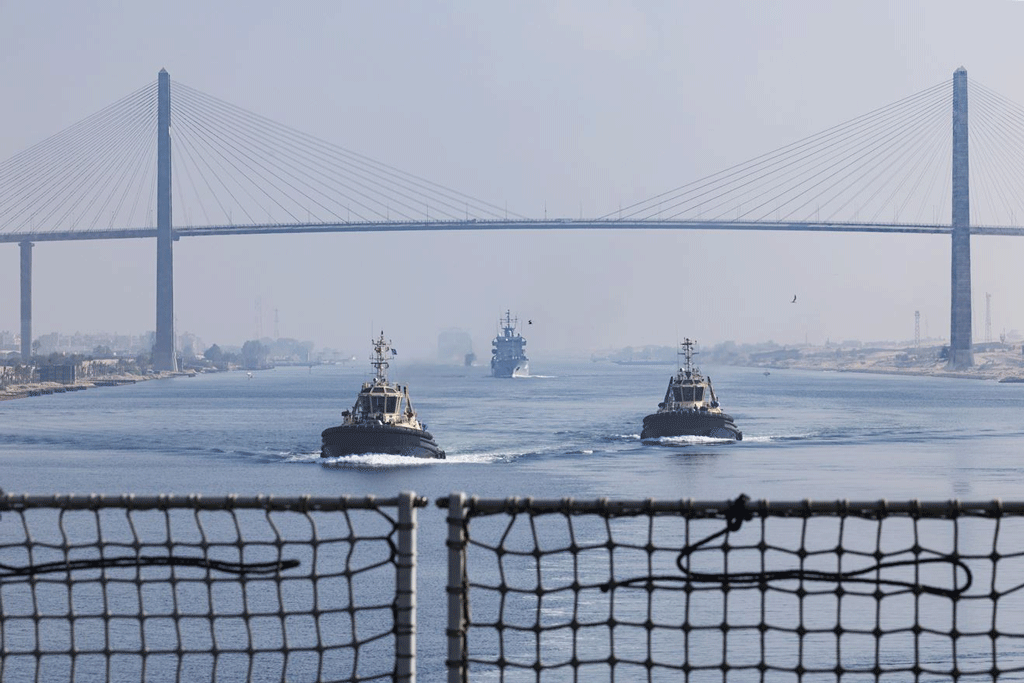
Sailing in company with German command and support ship FGS Mosel and minehunter FGS Fulda, Lyme Bay was shepherded through the Red Sea – where there remains the threat of missile and drone attack on passing shipping from Houthi rebels in Yemen – by air defense destroyer HMS Dragon. The 140-strong German force is equipped with autonomous systems, mine clearance divers and vessel protection teams.