
At the Socarenam shipyard in Boulogne-sur-Mer, construction is progressing on the Vega, the Navy’s third patrol ship. This new vessel will significantly strengthen the fleet’s operational capabilities and offer greater flexibility in maritime deployments.
With a third patrol ship, the Navy can better diversify its operational deployment. While one ship is operational and a second is undergoing maintenance, the Vega provides a necessary buffer. This interaction reduces risks and enables more efficient crew planning.
Moreover, an additional patrol vessel will enhance maritime security. The Vega will contribute to the protection of Belgian interests, including in the Exclusive Economic Zone (EEZ) for the energy island, wind farms, submarine cables, and gas pipelines. It will also assist in rescue operations.
New command for a new ship
In September 2026, Captain Alexander Degroote will take command of the Vega. He is very enthusiastic about this new challenge: “It’s a great honor to hear from the Admiral that I will be taking on this new command. Especially since this is a new ship.”
Captain Alexander is currently Head of Planning at the Navy Academy (NAC) and was awarded last year by the Ministry of Defence for the development of a new planning tool for the NAC.
Build with experience and innovation
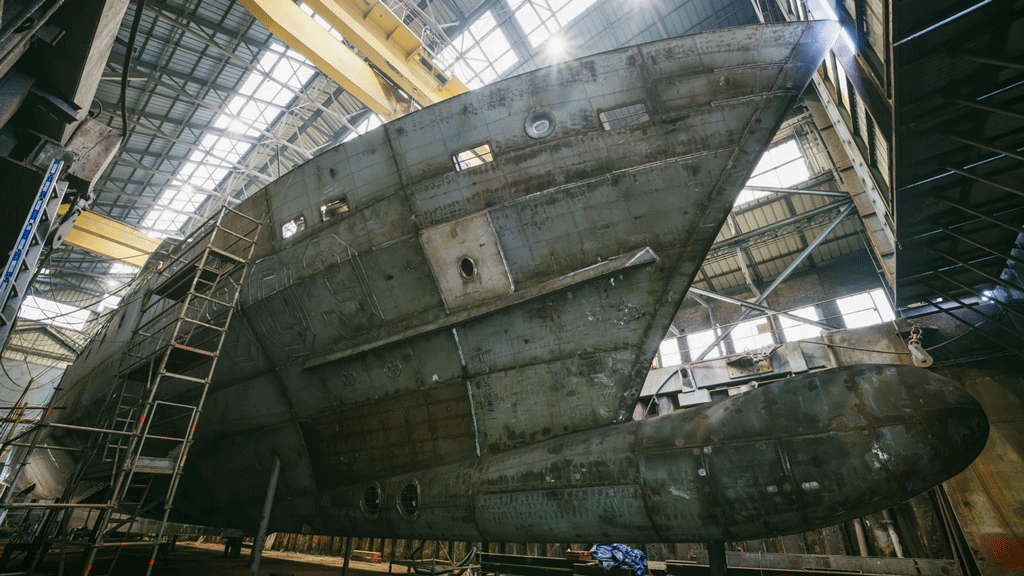
Construction of the Vega began with the keel laying and the placement of a symbolic coin by the sponsor city of Brussels (Keel laying of the third patrol vessel Vega | Defense). Today, the shell is prominently displayed at the Socarenam shipyard, where welding and metal construction demonstrate the progress. The patrol vessel will have a steel hull and an aluminum superstructure.
According to Mathieu Gobert, director of the shipyard company Socarenam, the combination of experience and innovation is crucial: “Our workshops breathe tradition. We often say that we build the ships of the future in the workshops of the past. We have decades of experience with this type of ship. For the Vega, we are integrating ten years of improvements and technological evolution.”
Technological innovations
Building the same type of ship again more than ten years after the construction of Castor and Pollux automatically means a thorough technological update of the design.
The Vega will feature an anti-roll tank with water reservoirs and bulkheads, ensuring more stable seakeeping without pumps. In addition, four movable interceptors will be installed on the stern, improving stability during turns and providing additional speed. This effectively compensates for the slight power loss caused by stricter environmental regulations.
To the launch
After the current construction phase is complete, the painting phase will follow. Launching is scheduled for March 2026. After that, the operational systems will be installed, sea trials will follow, and the reprocessing process will begin, leading to full operational readiness from 2027.