
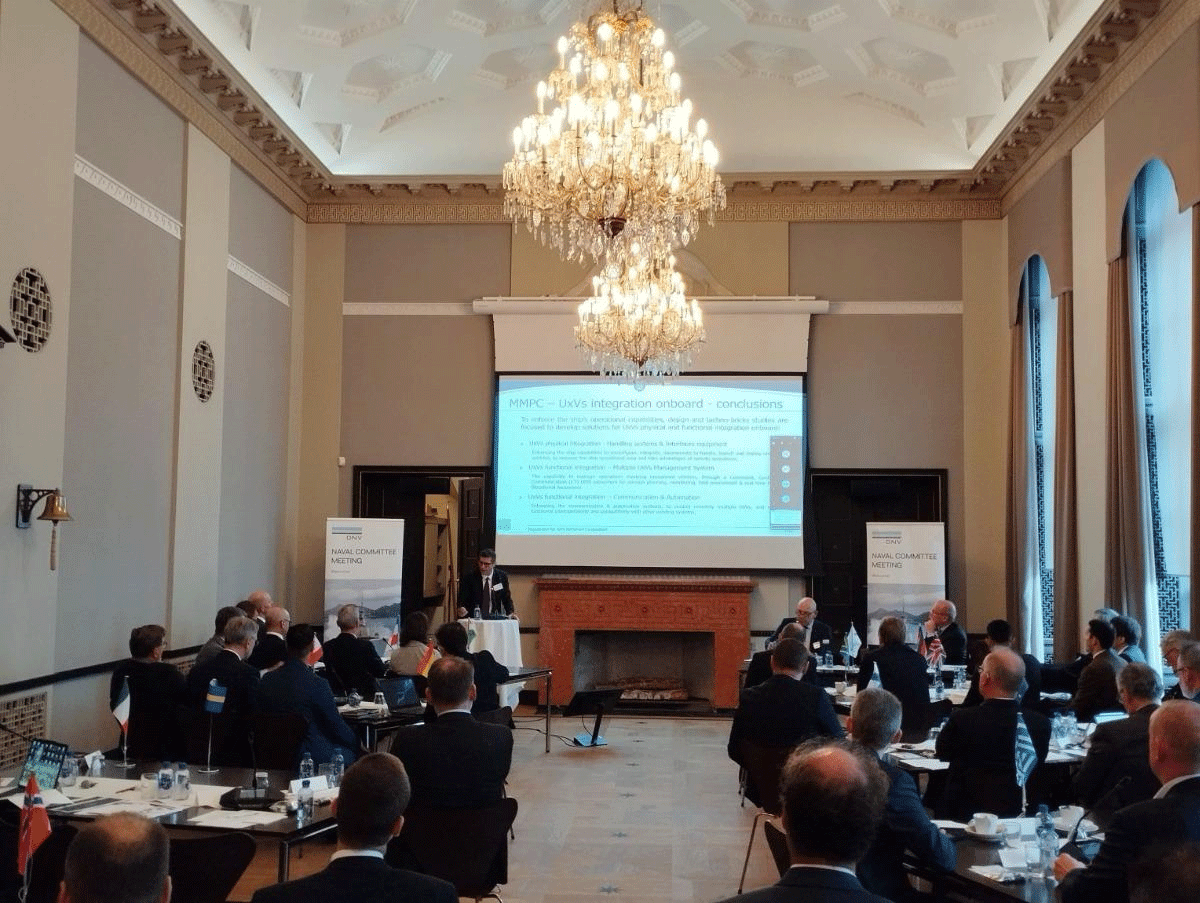
28 October 2025, DNV, a leading classification society in the naval sector, hosted the 10th Naval Committee Meeting 2025 in Copenhagen.
Senior representatives from Navies, Defence Industries, and Government Institutions discuss current threats, explore the strategic significance of maritime power, and identify the technological innovations required for the years ahead, mainly focused on the experiences and challenges in autonomous operations of surface, underwater and air unmanned vehicles and artificial intelligence for naval ships.
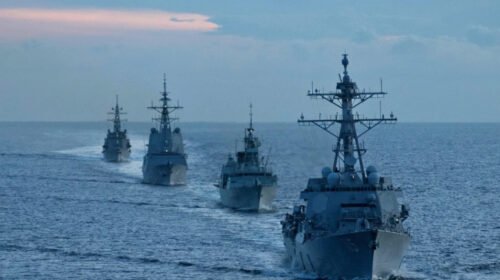
The surge of activities in the naval segment continues to be driven by the geopolitical situation with a variety of theatres. At an unprecedented pace, Navies are actively pursuing the modernization, enhancement, and expansion of their surface and submarine capabilities. This involves the exploration and integration of new cutting-edge technologies, the adoption of mission modules on standardized platforms and vessels with reduced crews or even completely unmanned vehicles.
The speakers emphasized the theme of experiences and challenges in autonomous operations and artificial intelligence for naval ships, with a focus on the safety at sea and the development of specific maritime regulations that could be applied to underwater and surface uncrewed, autonomous and remotely operated vehicles. Recent international developments are changing geostrategic priorities with an increase in the maritime influence of major powers and consequently the need for Europe to develop comprehensive naval capabilities and enhance maritime security.
Across panels and presentations, OCCAR delegate, MMPC Program Manager Andrea Millerani Trapani, presented the OCCAR-EA organization and business model as a concrete solution for EU countries to find stronger cooperation and common defense capabilities through cost-efficient and timely-delivery programs.
MMPC was presented as a demonstration of a concrete Naval Program, with modular approach, that permits to acquire additional capabilities, in line with the mission, such as deploy UxVs. Innovative solutions (Techno-Bricks) were presented to highlight the technological advances made in the UxV physical and functional integration on board (communication, command, control and automation capabilities across multi-domain operations) to improve situational awareness through the computer vision of the whole tactical picture.