
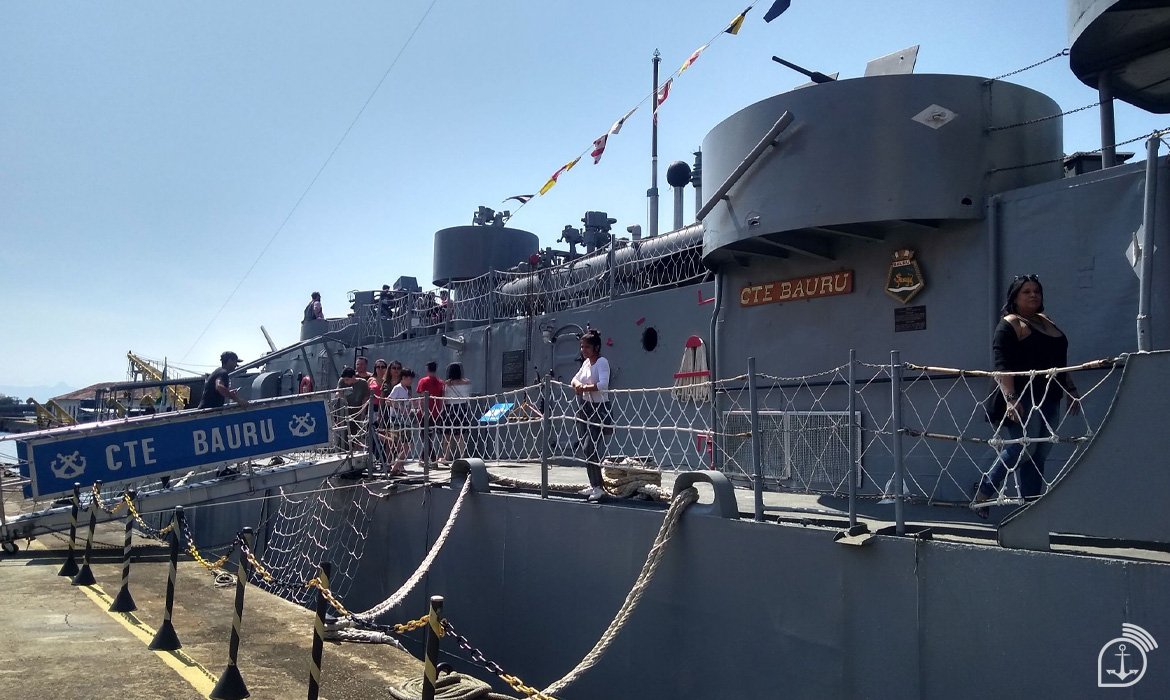
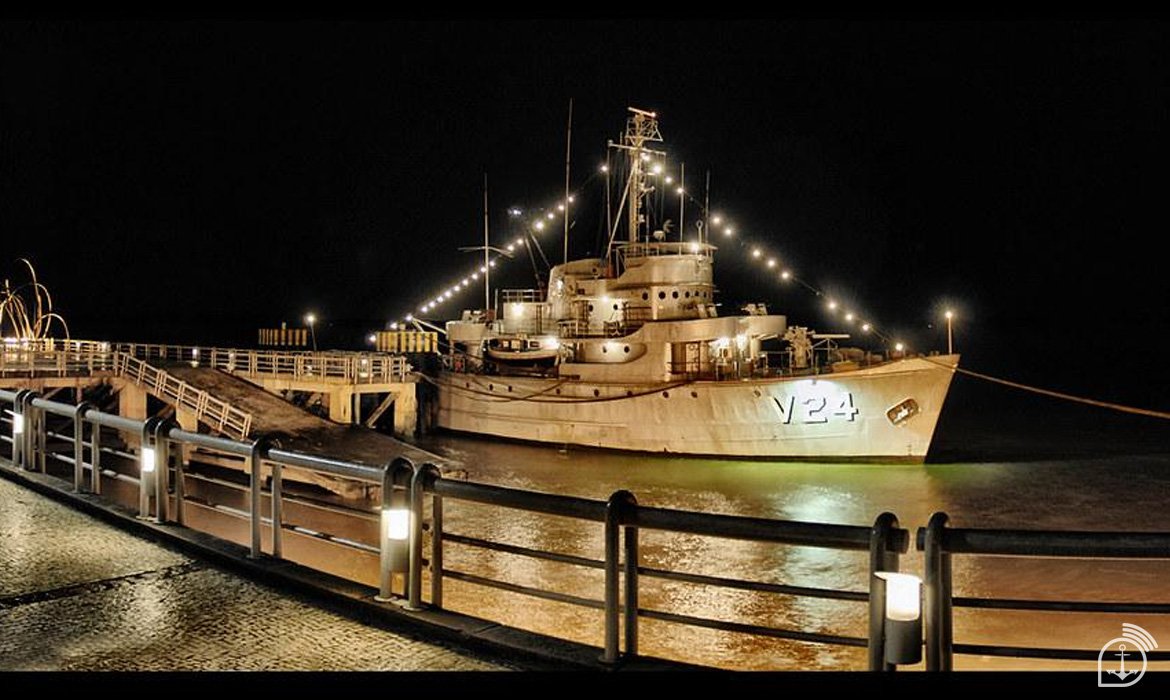
Entering the Escort Destroyer Ship (CTE) “Bauru”, docked at the Navy Cultural Space (ECM), in downtown Rio de Janeiro (RJ), is like immersing yourself in the history of the Brazilian Navy (MB). Responsible for preserving the memory of historical conflicts, the Navy’s museum ships represent the trajectory of the Naval Force and pay tribute to those who contributed to the defense of national sovereignty. The space also brings together other historical resources, such as a submarine, helicopter and tank, which reinforce the Navy’s legacy and its contribution to the country.
Acquired by Brazil from the United States in 1944, the CTE “Bauru” served in World War II. Its missions included hunting submarines, escorting convoys and supporting air services to evacuate Allied troops from Europe. Today, the ship preserves the memory of these historical episodes and is the first museum ship of the Navy.
For First Sergeant Robert Wagner Porto da Silva Castro, who has a PhD in history, preserving and rebuilding a memory that values the importance of the sea and the defense of Brazil’s interests through it for national development are fundamental. According to him, this process contributes to the expansion and consolidation of maritime awareness within Brazilian society.
The maritime mentality, as the historian highlights, expresses the conviction that the sea is essential for Brazil’s survival and development. This perception encourages the conscious and sustainable use of marine resources. In a scenario in which approximately 95% of Brazilian exports occur by sea, the preservation of museum ships helps to strengthen, in society, the importance of the Blue Amazon and the Economy of the Sea.
It was because of the length of the Brazilian coastline that the Navy entered the context of the Second World War. With the Atlantic Ocean as one of the main theaters of operations of the conflict, the Force escorted 3,164 ships, organized in 575 convoys, traveling approximately 600 thousand nautical miles, a distance equivalent to about 30 laps around the planet.
The end of the conflict resulted in the modernization of the Brazilian Navy through the acquisition of North American ships. Within this context, the current museum ship “Bauru” became part of the Brazilian Navy, escorting convoys in the South and Central Atlantic, with the aim of establishing a deterrent presence that would facilitate the passage of supplies and troops. For years, the North American destroyers acquired during the war constituted the backbone of the Navy.
Over the course of 37 and a half years of service in the Navy, the CTE “Bauru” traveled 295,428.9 nautical miles, totaling 1,423 days at sea. After undergoing renovations to restore its original World War II appearance, it was transformed into a museum ship and inaugurated on July 21, 1982, at Marina da Glória, in Rio de Janeiro. In 1996, it became part of the newly created Navy Cultural Space, where it remains to this day, joining other means employed in the preservation of naval history.
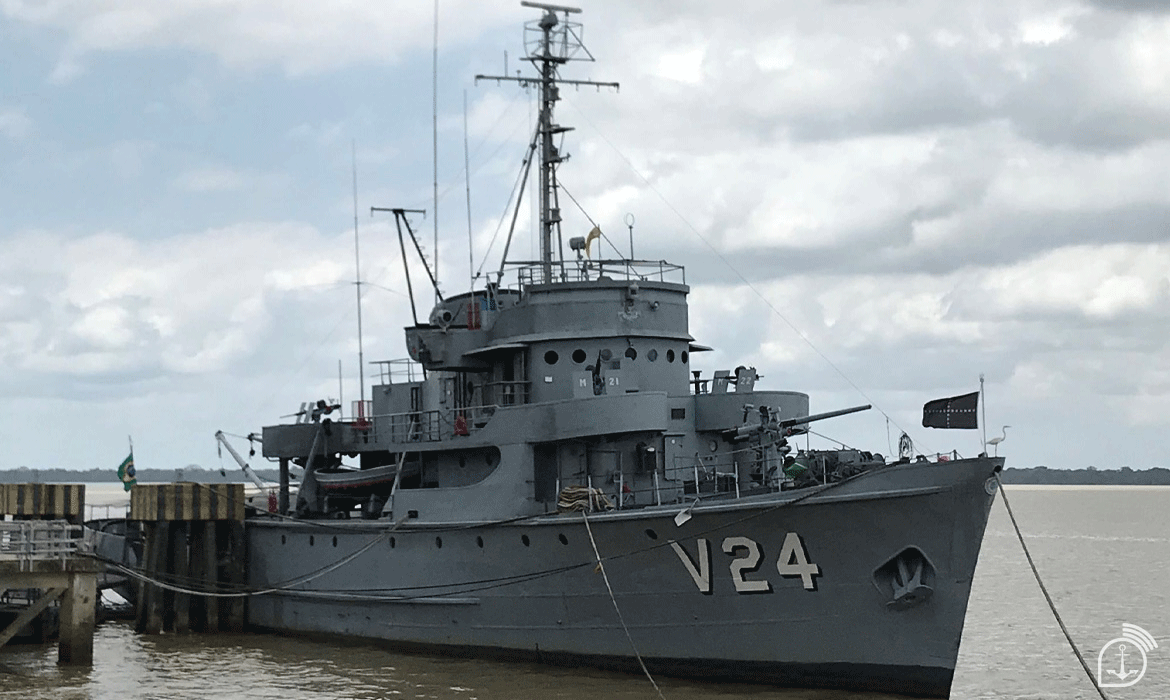
Just like the “Bauru”, the Corvette “Solimões”, in Belém (PA), also fulfills the mission of preserving naval history. Currently docked at the Val de Cães Naval Base, the vessel is undergoing a restoration process and should be reopened to visitors later this year, when it will return to the Casa das Onze Janelas pier, near the Estação das Docas, in the central region of the city.Operating as a museum ship for over two decades, the “Solimões” took on this role after an agreement was formalized between the Brazilian Navy and the Executive Secretariat of Culture of Pará. The purpose of adapting the Corvette for museum purposes was to preserve its original characteristics and make the exhibition circuit viable. Before its transformation, the vessel, the first museum ship in the Northern Region, was used in sweeping, mining, coastal patrol and maritime rescue operations.
Researcher Robert Porto, who works at the Navy’s Historical Heritage and Documentation Directorate (DPHDM), highlights the importance of museum ships: “They are a fundamental material factor in the process of preserving society’s memory of the Brazilian Navy’s participation in different historical moments, since they have the capacity to materialize and present these pasts”, added the historian. In addition to the museum ships, the DPHDM maintains other naval and military resources at the Navy Cultural Space in Rio de Janeiro that contribute to the preservation of national history. Although they are not officially classified as museums, these resources portray significant episodes in the history of the Navy and its actions in defense of sovereignty.
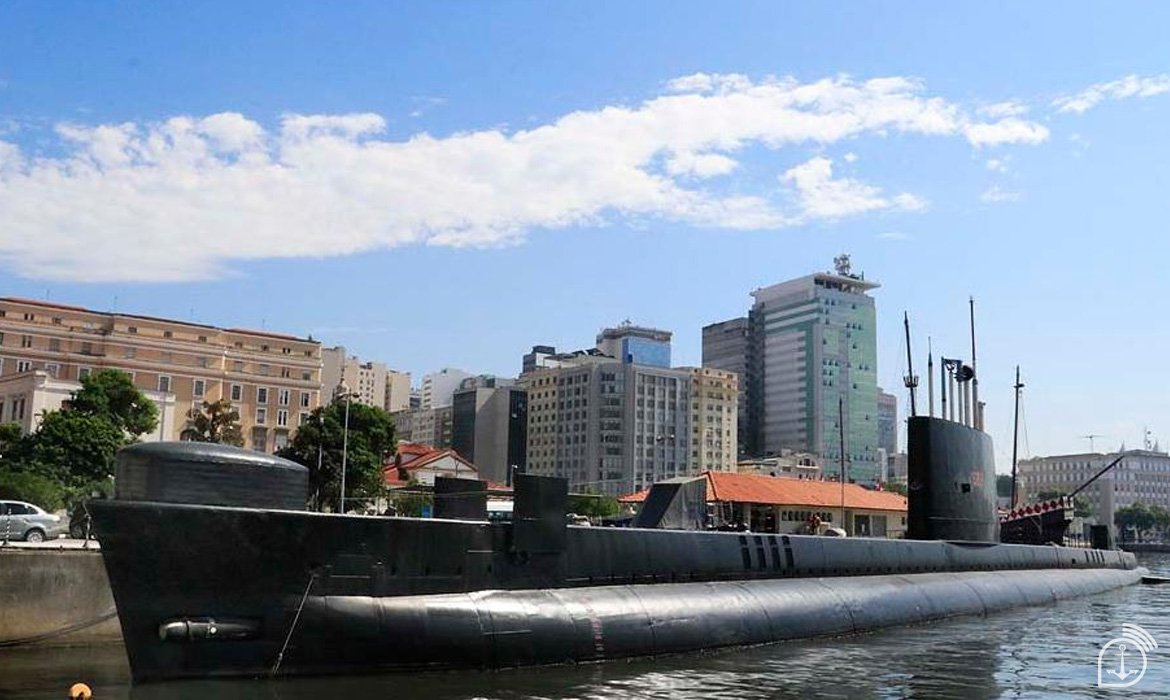
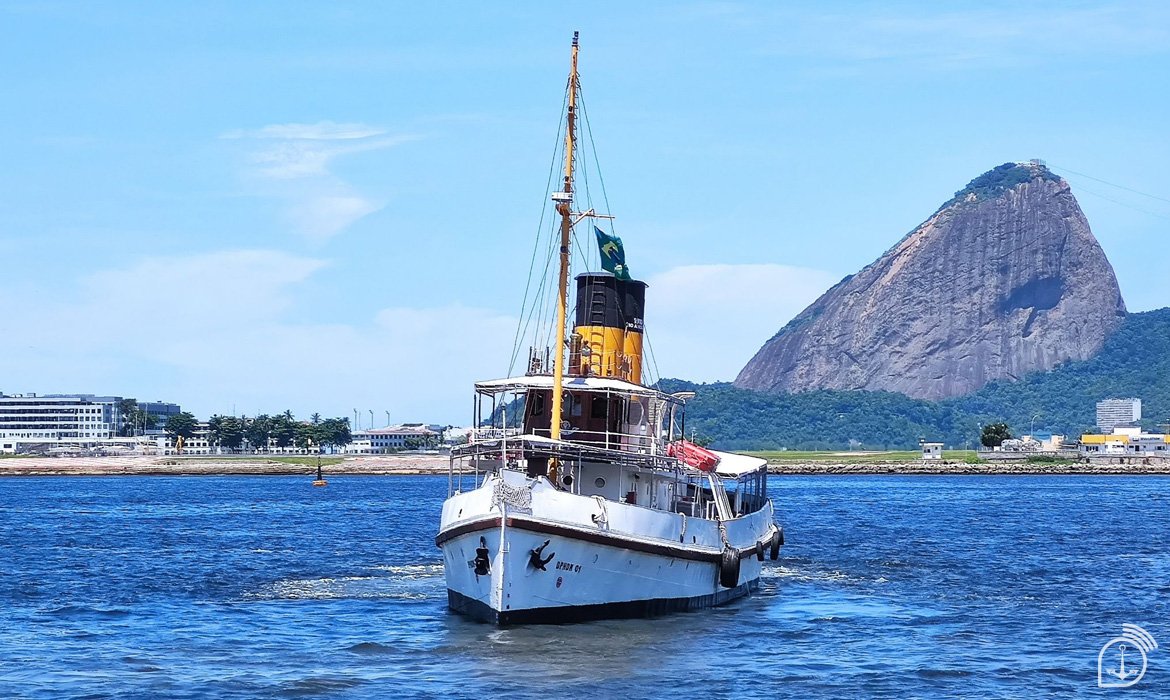
With over a hundred years of history, the Tugboat “Laurindo Pitta” is one of the most popular attractions at the Navy Cultural Space. Unlike other vessels, the vessel is still in operation, offering tourist tours of Guanabara Bay. On board, visitors can experience an immersion in Brazilian naval history. The former crew, made up of 34 men, actively participated in the First World War, operating with the Allied divisions on the west coast of Africa. In addition to the ships, the Navy Cultural Space has a submarine, helicopter, interception and attack aircraft (fighter aircraft) and tank, making up an open-air museum that preserves narratives from various historical moments. The site also houses a replica of the “Nau do Descobrimento”, built to commemorate the 500th anniversary of the arrival of Pedro Álvares Cabral’s expedition to Brazil.
Visit the Navy Cultural Space
The “Bauru” CTE is located in the Navy Cultural Space, on Orla Conde (Boulevard Olímpico), in downtown Rio de Janeiro. In addition to the ship, visitors will find a cultural center that preserves Brazilian naval history. Located in the old Customs docks, the ECM offers an immersion into the maritime and naval tradition. Among the attractions are the museum ships, the “Riachuelo” Submarine and the Nau dos Descobrimentos, as well as exhibits that portray milestones in national navigation.
Tickets can be purchased at the local box office or on the Navy’s official website. The space is open from Tuesday to Sunday, from 11 am to 5 pm, with last entry at 4:30 pm. On Sundays, from 9:30 am to 11 am, there is exclusive service for people with intellectual and/or mental disabilities, by prior appointment.
In addition to the permanent exhibitions, the ECM offers sea trips to Ilha Fiscal and the entrance to Guanabara Bay, providing an experience that combines culture and leisure.