
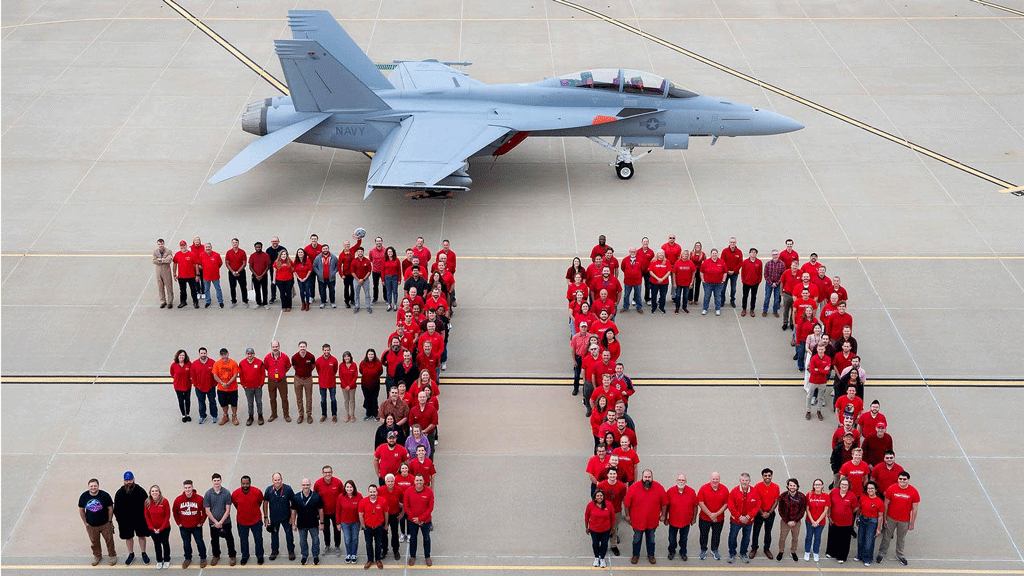
On Nov. 29, 1995, Boeing heritage company McDonnell Douglas took a major step forward in naval aviation when F/A-18 E1 — the first Super Hornet — lifted off at St. Louis Lambert International Airport with test pilot Fred Madenwald at the controls. The feat came nearly 17 years after the original F/A-18 Hornet’s first flight, launching a new era of fighters.
Three decades later, as production nears completion in 2027, the Super Hornet continues to offer lessons in design, engineering, and operational service. It is a legacy built by thousands of teammates, partners and suppliers, whose focus will soon shift to long-term support of the fleet.
The Super Hornet traces its origins to the “Hornet 2000” concept of the 1980s: a larger wing, a lengthened fuselage and improved systems aimed at increasing range, payload, and survivability. In 1992 the advanced F/A-18 E/F program received funding, and the Super Hornet prototype took to the air in 1995. From rollout to fleet introduction, the program was the product of intense teamwork between industry and the U.S. Navy — a collaboration that has paid dividends across decades of operations.
Bigger and more capable than its predecessor by roughly 25%, the Super Hornet brought greater range, more payload capacity, more powerful engines and was easier to maneuver. The platform continued the Hornet legacy — fast, effective, and adaptable — while incorporating modern materials and systems that made it easier to maintain and operate.