
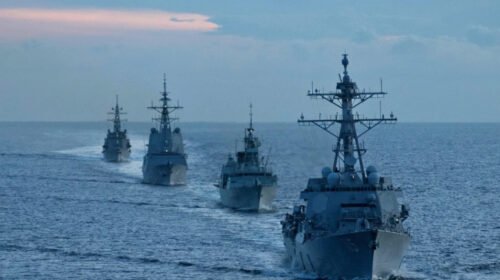
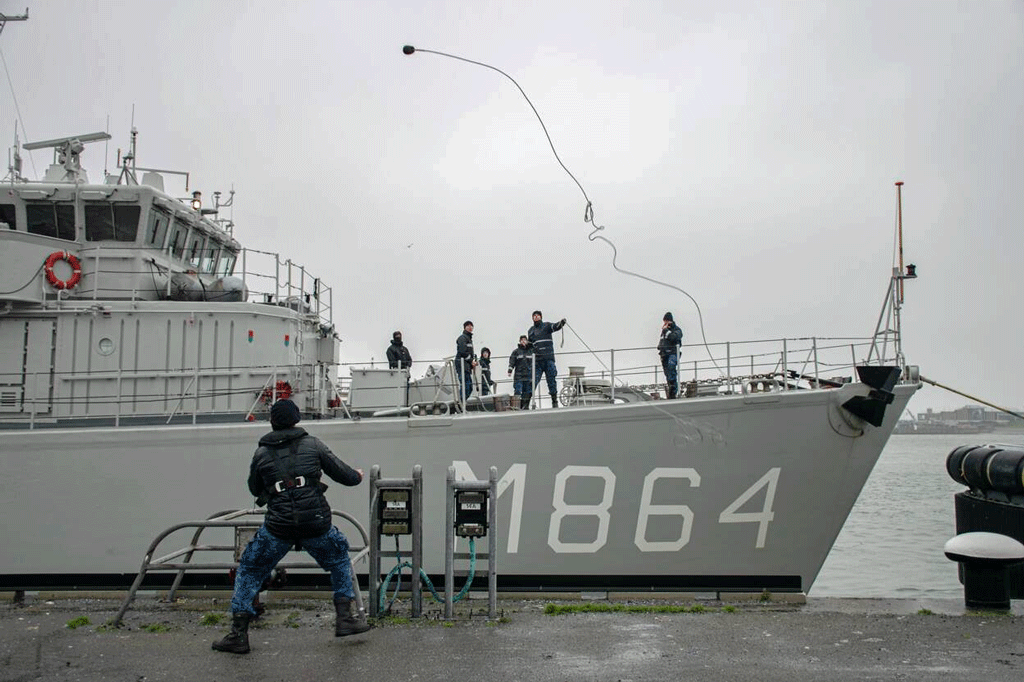
HNLMS Willemstad returned to her home port of Den Helder yesterday. For the past three months, the naval vessel has been part of the Standing NATO Mine Counter Measures Group 1 (SNMCMG1). Detecting and destroying sea mines was the focus during this period, as was protecting vital infrastructure.
For NATO’s Operation Baltic Sentry, SNMCMG1 monitored shipping in the Baltic Sea. This was to protect submarine infrastructure from sabotage, such as the numerous cables and pipelines that run across the seabed. The fleet’s ships operated in a dispersed manner for this task.
The clearing of explosives took place, among other things, during Exercise Sandy Coast in the North Sea. Thousands of mines from the First and Second World Wars are still lying there. The old ammunition remains can still cause explosions. This can injure or even kill people and animals, damage ships, block shipping routes, or make ports inaccessible. HNLMS Willemstad destroyed two naval mines during Sandy Coast.
Sea mines were also hunted in Estonian and Finnish waters, resulting in a total of 50 destroyed. Of these, the Willemstad’s diving team defused seven German mines from World War II. Using the Seafox unmanned system, the crew also cleared three so-called contact mines, which explode upon physical contact.
Latvian minesweeper Virsaitis led SNMCMG1. Ships from Belgium, Canada, Denmark, Germany, Finland, France, Lithuania, Poland, and, of course, the Netherlands also participated.