
The transport of the detached forces of the 6th Airborne Brigade and the combat module of the Naval Missile Unit are tasks carried out by the Navy as part of the Polish-Swedish exercise codenamed Gotland Sentry. For the Naval Operations Centre – Naval Component Command in Gdynia, which commands the forces allocated for maneuvers at sea, this is the next stage of preparations for the creation of the structure of the new Allied Operations Command in the Baltic Sea, POLMARFOR.
The Operational Command of the Armed Forces, together with the Swedish Joint Forces Command, is conducting the first-ever bilateral SNEX exercise codenamed Gotland Sentry (GOSE). The exercise takes place in one of the most sensitive regions of Europe – the Baltic Sea, whose strategic importance in the current security environment is becoming crucial.
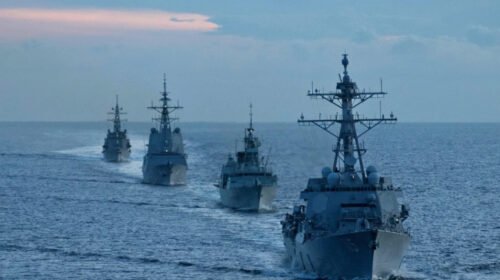
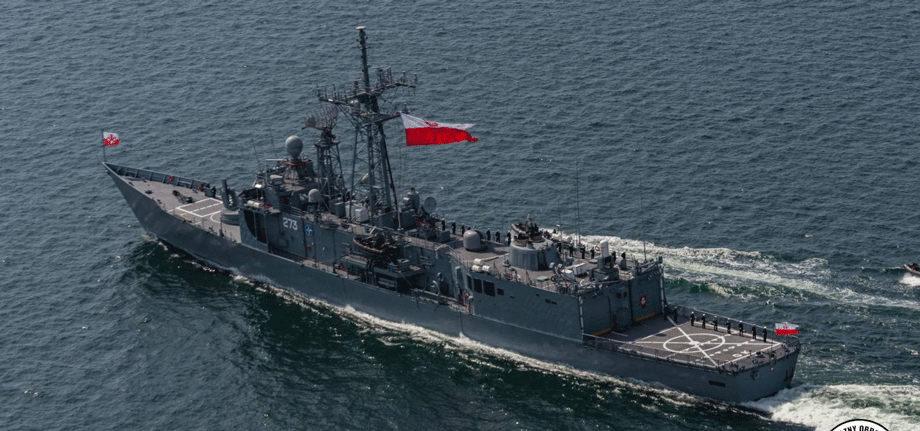
As part of the maneuvers, the Navy carried out the naval transport of the detached forces of the 6th Airborne Brigade and the combat module of the Naval Missile Unit (MJR) to Gotland. The transport and mine ship of the 8th Coastal Defence Flotilla, which carried out the task, was escorted by a Polish missile frigate and a Swedish corvette. The sailors of the MJR combat module on Gotland will carry out fire control training and simulated missile attacks on surface targets in cooperation with allied forces.
For the Naval Operations Centre – Naval Component Command, which commands the forces assigned to maneuvers at sea, this is another element of the preparations for the creation of the structure of the new POLMARFOR command and taking over duty as the Allied Naval Command Baltic – Commander Task Force Baltic (CTF Baltic). The function of CTF Baltic is rotational, the duty lasts 4 years. It is currently performed by the Naval Command DEU MARFOR in Rostock. The decision to establish a new regional command of the Alliance’s operations in the Baltic Sea, formed mainly by Poland, Germany and Sweden, was made at a meeting of NATO defense ministers held in June 2024 in Brussels.
SNEX (Short Notice Exercise) is an exercise characterized by a short time of anticipation of the forces involved, which is aimed at testing their ability to perform tasks within the prescribed time regime. The nature of SNEX means that there is no long planning period, high dynamics of operations and an emphasis on command flexibility and interoperability. This is one of the most demanding forms of military training, verifying actual combat readiness.
The aim of the GOSE exercise is to demonstrate the capabilities of the Polish and Swedish armed forces to quickly move separate components by air, sea and land, as well as to improve collective defense procedures. An important element is also the development of interoperability and command capabilities in the international environment, as well as an in-depth analysis of security challenges in the Baltic Sea region.
Gotland Sentry is the first SNEX exercise conducted in a bilateral form after the signing of the defense cooperation agreement between Poland and Sweden on 2 September this year. This document includes, m.in, joint operation in the Baltic Sea and the development of cooperation in the field of defense technologies. Thanks to GOSE, Poland and Sweden not only strengthen mutual military relations, but also send a clear signal of deterrence and readiness for joint defense within the framework of the regional security architecture.
The exercise proves that the political partnership between the two countries translates into practical operational activities. The role of Sweden – one of NATO’s youngest members – is of particular importance here, as it is integrating with the allied security system at an impressive pace and actively participating in activities to strengthen the stability of the region.
Gotland Sentry is a demonstration of unity, determination and readiness of Polish and Sweden to defend the Baltic region and its inhabitants.