
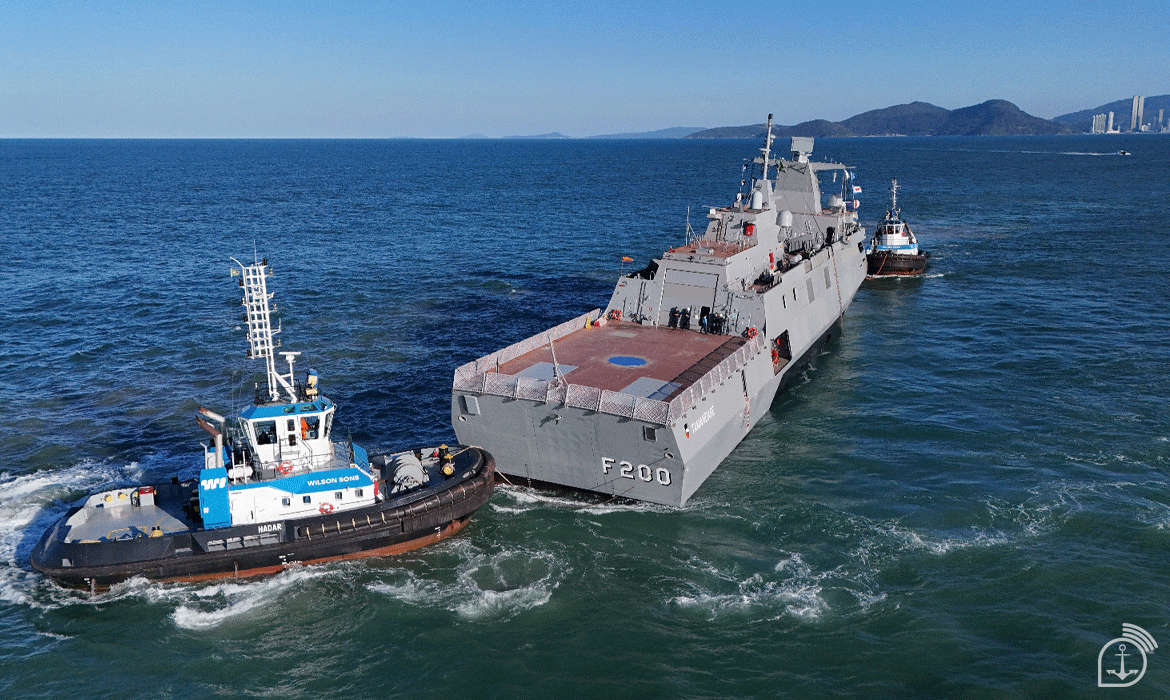
The Brazilian Navy (MB) recorded the first contact of the Frigate “Tamandaré” (F200) with the sea. During this initial phase of technical evaluations, the ship departed from the TKMS Brasil Sul Shipyard in Itajaí, Santa Catarina, with approximately 130 military and civilian personnel on board. During the cruise along the Santa Catarina coast, the integration of the propulsion, power generation, and automation systems was tested. The objective was to verify the ship’s performance in open water, including its electrical panels and alarm and security systems.
Launched in August 2024, the frigate is the first vessel in the Tamandaré Class Frigate Program (PFCT). After the testing period, the ship will return to the training schedule for its crew, which consists of 112 military personnel.
The frigate is expected to be delivered, in full operational condition, by December of this year. According to Vice Admiral Marcelo da Silva Gomes, Director of Navy Program Management, this sea acceptance phase enables the delivery of a safe and secure vehicle for the country’s defense.
“This process is essential for evaluating the project parameters, enabling adjustments to equipment and systems, fault corrections, and measurement of results. The completion will be marked by the issuance of official certificates and documents, which attest to the ship’s suitability to operate in accordance with technical and legal standards, enabling its delivery to the operational sector and, consequently, to Brazilian society.”
Considered one of the largest shipbuilding programs in the country, the PFCT stands out for its high local content and technology transfer. Part of the New Growth Acceleration Program (New PAC), it integrates the innovation axis for the Defense industry, responding to the need to modernize the Brazilian Navy.
The Tamandaré-Class Frigates are highly technologically complex vessels with a high level of combat capability, expected to operate in surface, air, and submarine warfare environments. Their mission is to strengthen defense capabilities by monitoring and protecting the 5.7 million square kilometers of the Blue Amazon.
The construction of the ship generated a significant impact on the economy, directly mobilizing two thousand professionals, around six thousand indirect jobs and 15 thousand induced jobs, totaling 23 thousand opportunities created.