
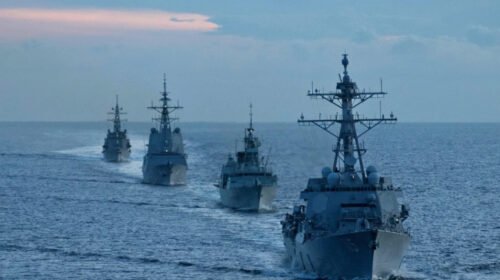
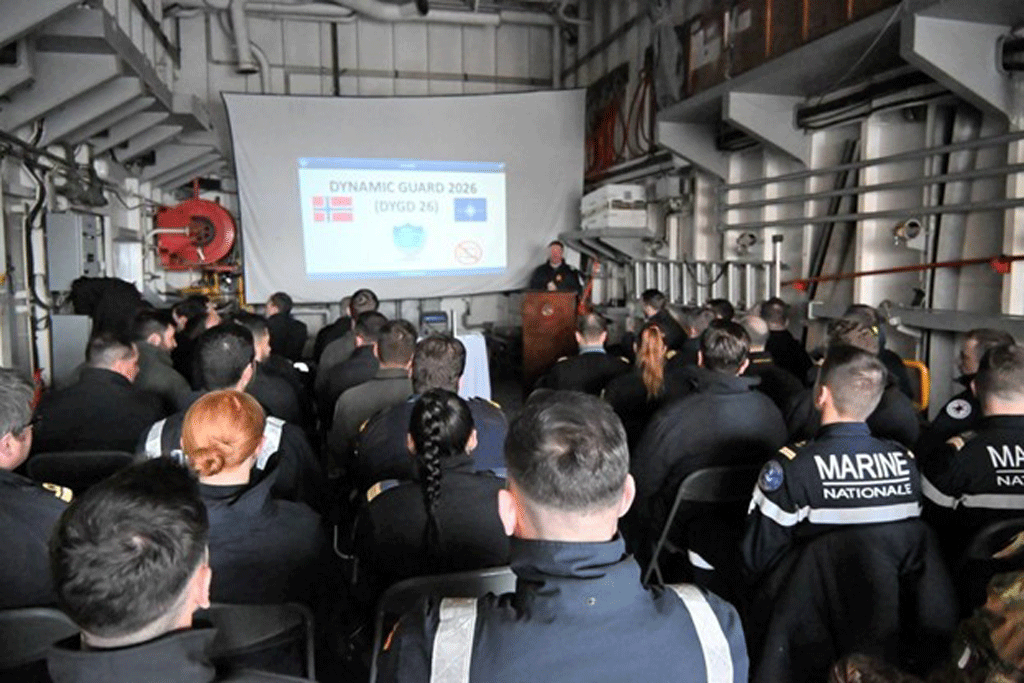
NATO placed electronic warfare (EW) at the forefront of maritime operations during Exercise Dynamic Guard, which took place in the challenging environment of the Norwegian Sea. The annual exercise trains Allied forces to operate in a complex and contested electromagnetic environment.
The exercise brought together surface combatants and air assets to conduct advanced spectrum operations designed to test resilience, interoperability, and tactical adaptability under simulated electronic threat conditions. Participating units included the French frigate Commandant Blaison, the German frigate FGS Sachsen, the Spanish amphibious assault ship ESPS Castilla, and the Spanish frigate Almirante Juan de Borbón.
The exercise was led by Commander Standing NATO Maritime Group One (SNMG1), Spanish Navy Rear Admiral Joaquín Ruiz Escagedo, who exercised tactical command with his staff embarked aboard Almirante Juan de Borbón.
He said Exercise Dynamic Guard 26 demonstrates NATO’s ability to operate effectively in a contested electromagnetic environment.
“For SNMG1, mastering the spectrum is essential to maintaining freedom of manoeuvre at sea. By training together in complex electronic warfare scenarios, we strengthen interoperability, sharpen our tactical edge, and ensure the Alliance remains ready to deter and defend.”
Throughout the exercise, surface forces conducted spectrum surveillance, threat emitter identification, signal classification, and electronic order of battle development in dynamic scenarios. These included simulated adversary radar tracking, deceptive electronic emissions, and multi-axis electromagnetic interference designed to replicate modern threat environments.
Frigates operated under strict Emission Control procedures, alternating between passive and active postures to rehearse low probability of intercept and detection operations. Coordinated electronic attack profiles incorporated synchronised jamming plans and deliberate spectrum management to avoid mutual interference while maximizing operational effectiveness.
Air assets integrated within the maritime task group further enhanced the training, conducting defensive countermeasure drills including the deployment of chaff and flares against simulated radar and infrared guided threats. These serials validated ship self-protection measures and reinforced soft kill doctrines across the force.
Exercise Dynamic Guard 26 demonstrated NATO’s ability to integrate multinational maritime and air forces in high end electronic warfare operations, ensuring the Alliance remains prepared to operate and prevail in an increasingly contested electromagnetic environment.
By refining electronic warfare integration across Allied navies, Dynamic Guard 26 strengthens collective defence posture, enhances deterrence credibility, and ensures freedom of manoeuvre in a domain which is increasingly decisive in modern naval operations.
SNMG1 is one of four standing NATO maritime groups providing continuous maritime presence and readiness in peacetime, crisis and conflict. Exercises like this contribute to Allied assurance measures, enhance interoperability and demonstrate NATO’s ability to operate across the entire North Atlantic, the Baltic Sea and the Arctic approaches.