
At sea, heading for Canada: 13 – 20 June 1924
Esquimalt and Victoria British Columbia, Canada: 21 – 25 June 1924
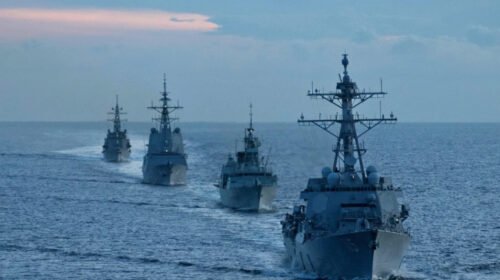
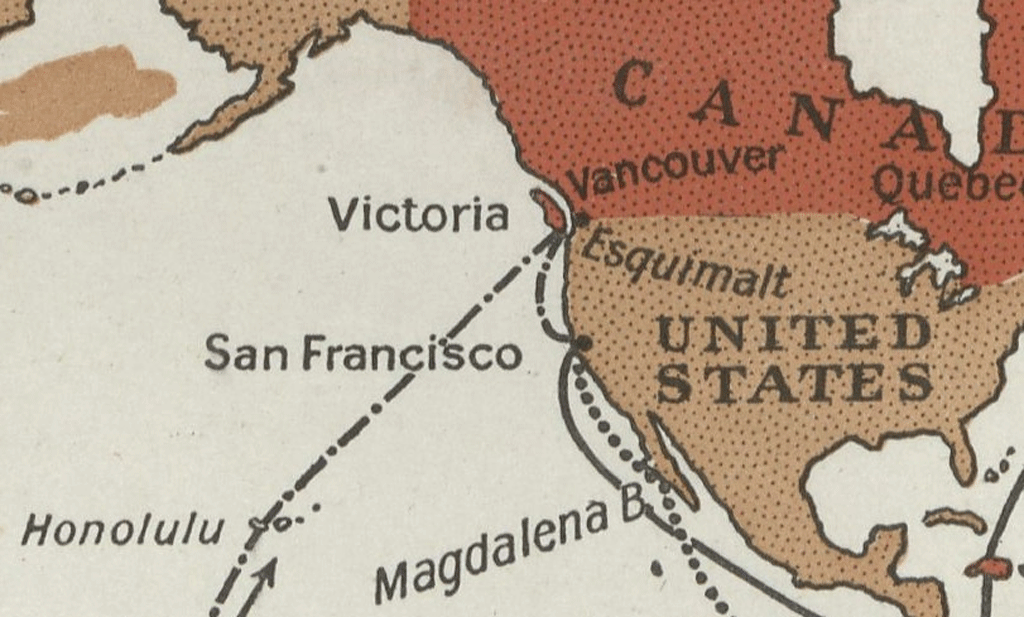
After nearly a week at sea, which included night exercises, the squadron was met off the coast of Canada by HMCS Patrician (His Majesty’s Canadian Ship) on 21 June. HMS Hood, Repulse and HMAS Adelaide sailed for Victoria while the light cruisers went to anchor at Esquimalt, across the water. The Mayor of Victoria, and other local Mayors came on board HMS Hood to pay their respects to the Vice Admiral to start the official engagements. Other functions included an official dinner with a ball at Government House as well as a march through Victoria by the naval brigade from the battlecruisers and HMAS Adelaide on 23 June 1924.
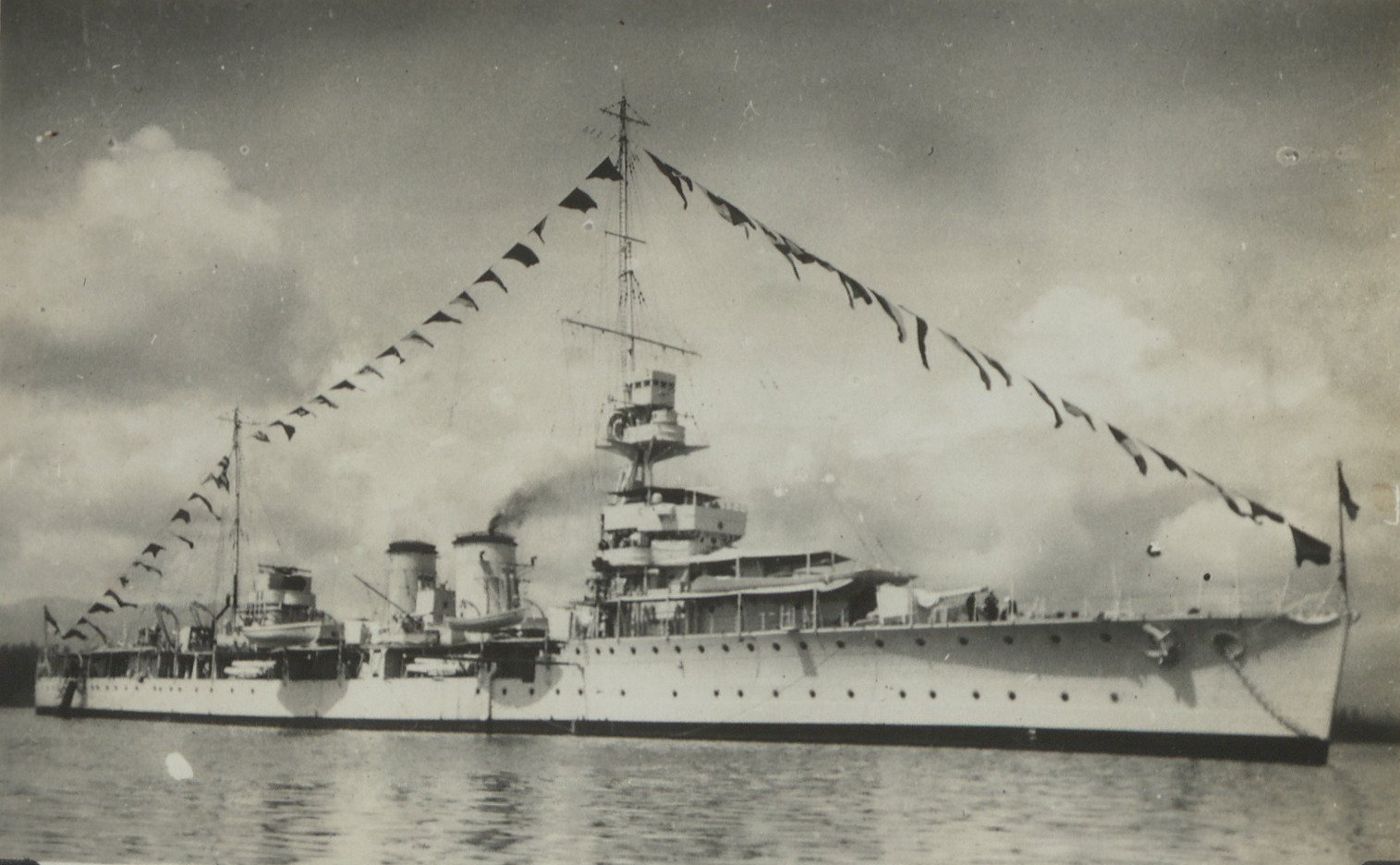
22 June 1924 was Coronation Day, to mark the anniversary of the coronation of King George and Queen Mary crowned 22 June 1911. To celebrate the ships were decorated with maritime flags, known as being ‘dressed overall’. This can be done to mark any national event, but this is only done when ships are in harbour, and not when they were at sea. The ships were also open to visitors and seeing as it was a sunny day they received them in large numbers.
Vancouver: 25 June 1924
The battlecruisers and HMAS Adelaide left Victoria for Vancouver, only 89 miles away, while the light cruisers remained at Esquimalt. At Vancouver, the ships were again escorted in by aircraft and were given a 21-gun salute at Brockton Point, which sits off the Downtown Peninsula inside the main harbour entrance. The purpose of the cruise to promote the naval defence of the empire was clear to at least some of the Canadian Press. For example, while there Vice Admiral Field, in charge of the squadron, received many questions from the Vancouver Sun. One question was, ‘should Overseas Dominions directly or indirectly contribute and why?’ Admiral Field’s answer was:
“The Empire must be regarded as a whole, for if anyone of its component parts is isolated, it will affect the trade and supplies of all the others. The prosperity and existence of a sea empire rest upon its sea communications. It must keep open its trade routes in the event of war. This is every bit as important to the Overseas Dominions as it is for the Mother Country. Money contributed to Naval defence by the Dominions is expanded solely on ships which are their own property and under their own control, and only in the event of war would these ships be placed under the sole direct of the Admiralty.” (Scott O’Connor, p.249)
Despite the open questions about naval defence, the officers and men appear to receive a genuine welcome from the local population. 200 men and 20 officers, under the command of Captain H.W. Parker (HMS Repulse) got the opportunity to travel for six days into the Rocky Mountains and across the wheat plains.

1 July 1924 was Dominion Day (now known as Canada Day), a national holiday in Canada, marking the signing of the British North America Act (Constitution Act) on 1 July 1867 and thus the creation of Canada. In Vancouver a Naval and Military Tournament was held which the squadron participated in. The football team from HMS Hood lost 3-4 to the Royal Canadian Mounted Police Team but won 1-0 against the Vancouver Elks. While back at Esquimalt, personnel from the light cruisers visited the local naval base.
The squadron left their respective moorings from Esquimalt and Vancouver on 5 July 1924, bound for San Francisco. The Lieutenant Governor, Walter Cameron Nichol signalled to the squadron on their departure:
“To Vice Admiral Field and Rear Admiral Brand, captains, Officers and men under your command. Not goodbye but adieu. … Officially and personally, I tender our profound regret at your departure and wish for you all the best that life has to offer in years to come.”
Postscript: HMS Hood and Repulse were both lost to enemy action in 1941. Materials courtesy of the Royal Navy Museum.