
By Rachel Butler
Arctic Institute
Russia is increasingly deploying information influence operations to target independence movements in Greenland and Scotland as part of a broader effort to weaken NATO’s strategic posture in the Greenland-Iceland-United Kingdom (GIUK) gap. These multi-layered operations are characterized by their adaptability and deniability, making them both difficult to detect and combat. Their covert nature allows Russia to plausibly deny involvement, making it a persistent challenge to establish direct links to official Russian institutions, which allows for continued interference without clear accountability. Evaluating these operations offers policy and decision‑makers actionable insights for confronting Russia’s information influence campaigns and developing strategies to safeguard national security, build population resilience, and ensure nuclear stability.
“Zone of Peace”
In 1987, Mikhail Gorbachev described the Arctic as a “zone of peace,” underscoring the region’s spirit of cooperation amid global power competition. Challenges such as climate change and the harsh Arctic environment have promoted a collaborative spirit, exemplified by the Arctic Council. Established in 1996, the Council places special emphasis on protecting the Arctic environment and promoting sustainable development. The Council’s role in fostering cooperation between Russia and NATO countries is particularly noteworthy, given the Cold War tensions and recent military buildup in the region.
While the Council’s commitment includes promoting “peace and stability in the region”, it has explicitly excluded military matters from its mandate.1) However, following Russia’s invasion of Ukraine, the seven Arctic NATO nations issued a joint statement that they would be “temporarily pausing [Russia’s] participation in all meetings of the Council and its subsidiary bodies” due to its violations of the “core principles of sovereignty and territorial integrity”.2) Two years on from the invasion, the Arctic Council has resumed narrow channels of engagement with Russia. Although it remains the sole body where Russia and NATO states still cooperate, it is restricted to working‑group functions,3) reflecting a sharply reduced relationship. Tensions in the region have further escalated as climate change reveals previously untapped resources and alternative sea routes, leading to an Arctic “space race.”4)
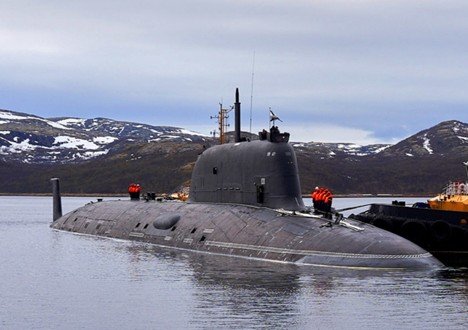
The Arctic, once thought to be insulated from global power competition, is now increasingly exposed to it. Russia is modernizing its military presence in the region by reactivating Soviet-era installations and enhancing its Northern Fleet, including its nuclear-powered ballistic missile submarines (SSBNs), a crucial component of its strategic deterrent.5)
However, NATO controls the crucial Greenland-Iceland-United Kingdom (GIUK) gap, which restricts Russian fleet access to the North Atlantic. NATO’s monitoring and anti-submarine capabilities make Russian activities unlikely to go undetected, effectively limiting Russia’s second-strike options and making control of the gap essential for maintaining nuclear stability during wartime.
Russia has been indirectly supporting independence movements in Greenland and Scotland to undermine NATO’s control over the GIUK gap.6) Through information influence operations, Russia aims to fragment these regions to gain fleet access to the North Atlantic. If NATO were to lose control over the gap, its deterrence capabilities would be weakened as Russian SSBNs could pass through covertly. Furthermore, other regional conflicts could escalate as increased Russian threats in the gap might force the US to redeploy its naval assets from the Indo-Pacific, ultimately undermining its deterrent posture against China.
Global Dominance Through the Arctic
Having served as a platform for cooperation among global adversaries, the Arctic is often mischaracterized as irrelevant or immune to conflict. During the Cold War, it emerged as a strategic focal point with vital sea routes and missile deployment capabilities, providing the most direct airborne route from Russia or China to North America.7) Both the United States and the Soviet Union militarized the region with missile sites and early warning systems crucial for deterrence. However, after the Cold War, nations shifted their focus to other national security concerns.
As the Arctic warms at four times the global rate, the potential for new sea routes and opportunities for resource extraction has triggered a second wave of militarization.8) The Northern Sea Route has become an attractive line of communication for many nations that are affected by the rising cost of insurance for transiting through the Bab el-Mandeb Strait, as Iran-backed Houthi rebels in Yemen continuously target commercial vessels.9) Additionally, untapped resources provide an opportunity for nations that have struggled with energy security following Russia’s halt of exports to Europe.10)
Both NATO Arctic nations and Russia are actively rebuilding the Arctic’s Cold War military footprint by expanding on their legacy installations, with a strong emphasis on missile deployment and storage sites. Russia has also begun building ground bases and positioning potential invasion forces near its borders with Norway, Finland, and Sweden. This increase in military presence comes amid heightened concerns over Russia’s disregard for territorial boundaries, as seen by its annexation of Crimea in 2014 and the invasion of Ukraine in 2022. Unlike Ukraine, which experienced weeks of Russian troop mobilization at its border prior to invasion, NATO Arctic nations may lack the same lead time due to the proximity of Russian forces.
The warming of the Arctic, combined with Russia’s disregard for the sovereignty of other nations, has refocused global security concerns towards this region. Russian dominance poses a risk of invasion, nuclear instability, and irreparable harm to deterrence efforts, especially given its collaboration with China (which recently declared itself a “near-Arctic state”).11) NATO Arctic nations must safeguard and enhance their strategic positions, starting with the GIUK gap.
The GIUK gap plays a crucial role in limiting Russian activities on a global scale. Russia’s Northern Fleet—the home of Russia’s sea-based nuclear deterrent, and surface vessels such as destroyers, battlecruisers, and icebreakers—resides on the Kola Peninsula. This base lies north of the GIUK gap along the Northern Sea Route, and only 125 miles from the Finnish border.12)Although the fleet benefits from a year-round ice-free environment due to the North Atlantic Current and operates from a Soviet-era base, NATO nations flank the only passage this fleet has to the North Atlantic.13)
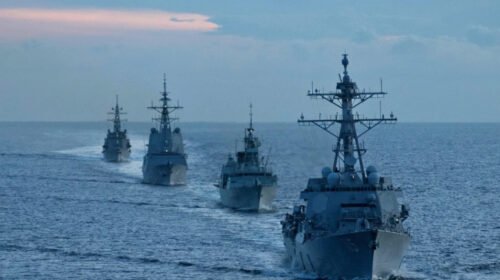
NATO has shown its capability and willingness to use the gap as a strategic choke point against Russia through patrols and exercises. Recently, Danish and Icelandic forces conducted drills in the Denmark Strait, officially aimed to improve their skills in Arctic conditions and “increase situational awareness”.14) Collaboration among Arctic nations, coupled with vague rationales for military exercises, enables NATO forces to patrol and project strength without directly engaging Russia. Consequently, the GIUK gap poses a strategic challenge to Russia’s nuclear capabilities and its global strength projection. Rather than directly confronting NATO forces—an approach that could escalate into open war—Russia has opted for a multi-layered, deniable strategy to enhance its operational reach in the GIUK gap by deploying information influence operations in Greenland and Scotland.
Russian Information Influence Operations
Russia is increasingly utilizing what can best be categorized as information influence operations, “where information plays a key role to exert power, erode the target’s willpower, confuse and constrain the target’s decision-making, and influence public opinion.”15) The RAND Corporation connects information operations, information warfare, and influence operations, describing them as soft power projection, involving both intelligence collection and propaganda dissemination.16) Such operations are executed covertly, employing a multi-layered strategy with adaptable narratives that respond to geopolitical shifts, thereby allowing for deniability and making them challenging for targeted nations to identify and combat.17)
There is no global consensus on effectively addressing these operations, which vary widely in execution. For example, in September 2024, the US Department of Justice seized 32 domains used by Russian-sponsored campaigns to spread propaganda against Ukraine and influence elections, including the 2024 US Presidential Election.18) This approach, deployed against the US, contrasts with the methods Russia used in Lithuania in 2017, where false claims were made about German soldiers allegedly raping underage girls. This disinformation, sent through email to various Lithuanian news outlets and the president of the Lithuanian Parliament, was soon disproven by local authorities,19) with NATO’s Assistant Secretary General for Emerging Security Challenges, Ambassador Sorin Ducaru, stating, “This is a clear example of information manipulation with a sense of weaponization.”20) This operation is believed to have been aimed at disrupting NATO’s enhanced forward presence in its Eastern territories, of which German troops in Lithuania were a central component.21)
As Russia navigates the constraints of the GIUK gap while seeking to avoid direct conflict with NATO, it has turned to targeting independence movements through information influence operations in nations that flank the GIUK gap. A 2024 NATO Strategic Communications Centre of Excellence report notes an increase in these operations in the Nordic-Baltic area, as Russia attempts to establish dominance in the Arctic through covert division.22)
Greenland’s Independence Movement
A NATO Arctic nation by way of Greenland, Denmark actively opposes Russian interests and has shown resilience against Russian information influence operations. This resilience, common among nations with strong economies and trust in institutions, arises partly from Denmark’s awareness of being a target of such operations.23) A 2023 report from the Danish Defence Intelligence Service highlighted Russia’s tactics to sow discord within NATO and the EU.24) Recognizing the lack of success in their operations, Russia identified Greenland as the chink in Denmark’s metaphorical armor against Russia’s information influence operations.25)
Since 1380, Danish control over Greenland has caused tensions, especially onwards from the 18th century following the forced assimilation that suppressed the Inuit culture and language. While Denmark prospers, Greenland struggles with high unemployment, increased suicide rates, and a life expectancy averaging 10 years lower than the Danish average.26) In recent decades, Greenland’s independence movement has grown. Former Prime Minister Mute Egede emphasized that decisions about Greenland and the Arctic should be made by “… the Indigenous people and people who have the Arctic as their home.”27)
Greenland’s independence movement is ultimately under Danish authority, which requires a referendum approved by its Parliament.28) In 2023, Greenland’s representative Aki-Matilda Hoegh-Dam introduced a draft constitution aimed at removing the Danish monarch as the head of state.29) However, this proposal only increased tensions in Parliament, partly due to Hoegh-Dam delivering her speech in Greenlandic instead of Danish. Although Greenland has not yet achieved full independence from Denmark, its ongoing efforts have led Russia to increase its information influence operations. Having struggled to influence Denmark in its past operations, Russia has chosen a dual approach: fostering discord between Greenland and Denmark, as well as between Denmark and the United States.
In October 2019, a letter circulated on social media from the Greenlandic Minister of Foreign Affairs to an Arkansas senator revealed US support for a Greenlandic independence referendum.30) This coincided with a visit by a high-ranking American delegate to Greenland to discuss trade relations —a crucial topic given Greenland’s small economy. This raised concerns about the strengthening ties between the US and Greenland, as Greenland currently depends on Denmark for aid and defense management. Yet if Greenland were to become independent, such resources would need to be supplemented by an allied nation, such as the US31)
The letter was deemed a forgery of Russian origin by Aleqa Hammond, chair of Greenland’s Foreign and Security Policy Committee, a view supported by military analyst Steen Kjærgaard, who pointed to Russia as the “most obvious” source.32) As Russia denied involvement and the forgery’s origins were untraceable, the Danish Defense Intelligence Service did not formally accuse Russia of operating against Denmark until 2025, when a manipulated social media post was traced to a pro-Russian influencer who was confirmed as part of a larger network operating on behalf of the Russian state.33) The post depicted Danish Member of Parliament Karsten Honge advocating for Russia to prevent Greenland from being annexed by the United States, a concern that emerged following US President Trump’s statements regarding the acquisition of Greenland.34)
Russia’s efforts to create discord between Greenland and Denmark, as well as between Denmark and the US, had limited impact due to Denmark’s awareness of the claims and their source. However, following Honge’s fake post on social media, Danish forces increased their presence in Greenland to “support societal security”, receiving support from leaders like French President Emmanuel Macron and King Charles III, who diplomatically cautioned the US about the potential consequences of attempting to annex Greenland.35)
Yet even if Greenland gained independence or were to fall under US rule, it would likely remain under NATO due to its strategic location. Former Danish Ambassador to NATO, Michael Zilmer-Johns, emphasized the need for a model ensuring Greenland is not a battleground for great powers, “…but has us as a guarantor and remain a member of NATO…”36) Ulrik Pram Gad from the Danish Institute for International Studies stated, “The US can rest assured that, whatever happens, independence or not, Greenland wants to be a part of NATO.”37)
Aside from NATO membership, Greenland’s independence faces significant challenges, including a heavy reliance on financial support from Denmark (which contributes over $500 million annually—about 20 percent of its economy).38) With a small population of around 57,000, Greenland could reduce this dependency by leveraging its estimated 31.4 billion barrels of untapped oil and gas reserves. Still, it would first need to lift the exploration license ban enacted in 2021.39) Consequently, Russia’s operations are not aimed at facilitating Greenland’s independence, but rather at creating enough discord to render allied nations ineffective in protecting the GIUK gap.
For example, Greenland has no military of its own and has only a minimal Danish presence. Denmark maintains a policy of allowing the US access to its bases, as well as operating the Pituffik Space Base in Greenland, a key part of the Arctic ballistic missile warning system. If the relationship between Denmark and the US deteriorates, both the GIUK gap and the early warning system at Pituffik would be at risk. By exploiting historical tensions between Denmark and Greenland, as well as recent conflicts between Denmark and the US regarding comments of acquisition, Russia seeks to amplify these divisions through its adaptable and covert information influence operations.
Scotland’s Independence Movement
The brilliance of Russian information influence operations lies in their ability to exploit long-established tensions between nations, races, or religions, leveraging existing rifts and seamlessly blending with historical conflicts. Much like Greenland and Denmark, Scotland has a complex history with its imperial power, England. Gaining its independence in 1328 after the First War of Scottish Independence, Scotland was reintegrated into Great Britain in 1603 when King James VI of Scotland became king of England, Scotland, and Ireland. However, Scotland maintains a strong national identity rooted in its historical independence, celebrating figures viewed as traitors to the English crown, such as William Wallace and Robert the Bruce.
The tension between Scotland and England evolved from military conflict to political dialogue. Independence has remained a persistent theme in Scottish politics, despite the 2014 independence referendum’s failure. The 2014 referendum failed with 44.65 percent of votes supporting independence, a narrow decision which forced Scotland to remain part of the UK.40) In 2020, the UK’s Intelligence and Security Committee acknowledged “… credible open source commentary suggesting that Russia undertook influence campaigns”41) in the 2014 referendum, describing it as “the new normal”42) for the UK to be the target of such operations.
Despite recognition of Russia’s role in fueling Scottish independence sentiment, public trust in institutions was already severely compromised. Between the 2014 referendum and the 2020 Intelligence report that accused Russia of interference, nearly 400,000 Twitter messages from fake accounts linked to Russia claimed that the independence vote had been manipulated against Scottish independence, rather than for it, as the 2020 report disclosed.43) Ben Nimmo from the Atlantic Council noted, “The anger and disappointment felt by many yes voters were entirely sincere [and] those sentiments were fanned by pro-Kremlin trolls, in a manner characteristic of Russian influence operations.”44)
Scotland’s push for independence intensified after the 2016 Brexit vote, with 62 percent of Scots45) favoring EU membership due to its trade benefits and funding support, from which it would receive £780 million in EU funds (from 2014-2020)46) allocated with local autonomy. In comparison, the UK’s proposed replacement funds were controlled by UK oversight.47) Consequently, when the UK decided to leave the EU, many Scots felt they were being forced to do so against their democratic will, a feeling parallel to that of their revolutionary forefathers.
The Intelligence and Security Committee of Parliament noted similar trends between the EU and Scottish referendums and has called for an investigation into potential Russian interference. Yet the UK has been hesitant to publicly recognize Russian interference, allowing such operations to go unchallenged in Scotland, where Russia has effectively blurred the lines between its operations and Scottish patriotism.48)
Unlike Denmark, the UK has largely failed to identify and therefore combat Russian information influence operations. Yet Russia is unlikely to leverage this inaction to achieve Scottish independence for two primary reasons. Firstly, Scottish independence now falls under the authority of its imperial power, as the UK Supreme Court ruled in 2022 that the Scottish Parliament could not hold an independence referendum without the consent of the UK government.49) Secondly, an independent Scotland possesses the potential to strengthen Western alliances by mending divisions caused by the UK’s exit from the EU,50) and is likely to be granted NATO membership. According to Stewart McDonald of the Scottish National Party, “when it comes to Russia… we know it would be no friend of the Scottish independence movement. We want an independent Scotland to be in the EU and NATO and all the other bodies you would expect a country like Scotland to be in.”51)
Russia’s objectives regarding GIUK can be achieved without Scottish independence. Remaining part of the UK while possessing a strong independence base is more likely to hinder the UK’s operational effectiveness in the GIUK gap, especially given that Scotland is essential to the UK’s nuclear deterrence strategy. Home to HM Naval Base Clyde, commonly referred to as Faslane, Scotland houses submarines that serve as the UK’s sea-based nuclear deterrent. Like Russia’s Northern Fleet, it provides the country with second-strike capabilities. Russia has recently deployed intelligence-gathering vessels off Scotland’s western coast, exhibiting a clear interest in Faslane.52)
Division between Scotland and the rest of the UK could threaten the nation’s nuclear deterrent, granting Russia an advantage in the Arctic. Simply relocating nuclear capabilities to England is unlikely, as the extensive infrastructure necessary to support the base dates to the 1950s.53) Knowing this, Russia aims to undermine the UK’s current capabilities and operate more freely through the GIUK gap by exploiting long-standing tensions between Scotland and England, as well as between Greenland and Denmark. This strategy is both flexible and difficult to counter, as it operates behind the shield of long-standing political and cultural tensions that have survived centuries. These divisions are unlikely to be easily bridged, even if doing so meant revealing and countering Russian activity.
Conclusion
Russia’s information influence operations have turned the GIUK Gap into a battleground where conventional deterrence intersects with cognitive warfare. As climate change increases accessibility to the Arctic and great power competition seeps into the region, protecting the GIUK Gap is vital not only for maintaining nuclear stability but also for preserving the cohesion of Western alliances. The gap remains the primary maritime chokepoint constraining Russia’s Northern Fleet, and any erosion of NATO’s ability to monitor or control this corridor would have profound implications for deterrence and the strategic balance in the North Atlantic. Under these circumstances, Arctic NATO nations must continue to adapt their approach, both physically and cognitively, to counter Russia’s multi-layered tactics and ensure the stability of the Arctic.
Russia’s operations in Greenland and Scotland illustrate a broader strategy to weaken NATO cohesion by exploiting regional vulnerabilities for greater access to international waters for its Northern Fleet. Reliance on these operations indicates Russia’s preference for non-military tactics and reluctance to resort to military action, a reality that Western nations have so far failed to leverage. Rather than solely monitoring for clear escalations, efforts should prioritize identifying subtle Russian actions that could lead to a gradual loss of regional control. This approach demands an understanding of the vulnerabilities Russia seeks to exploit, particularly those embedded in long-standing historical tensions among allied states. Such tensions, whether rooted in unresolved injuries from colonial rule or in national identities shaped by revolution against imperial overlords, provide fertile ground for Russian operations to fracture unity and weaken NATO’s strategic position.
Combatting Russia’s influence campaign in the GIUK gap requires more than modernized military infrastructure. Identifying these fault lines and assessing how they intersect with Russia’s strategic objectives is critical to building Arctic resilience. Governments must prioritize transparency regarding incidents influenced by Russian information operations and enable information-sharing mechanisms with allies. Given that such operations rely on long-standing regional tensions between NATO allies to remain concealed, policy and decision‑makers often lack clear guidance on how to confront these threats without provoking public backlash. Arctic nations have too frequently adopted a defensive posture, choosing to downplay or overlook evidence of Russian interference, only enabling their success. Through greater transparency, governments can strengthen public awareness and foster unity by reframing century-old grievances against the backdrop of a more immediate external danger.
This cannot be realistically achieved without information‑sharing among allies. Given the flexibility and multi-layered nature of Russia’s influence operations, adopting a uniform countermeasure is unrealistic. In this context, variation is not a weakness but a necessary way to combat the tailored methods Russia employs against each country it targets. By enabling information sharing among NATO allies, a flexible yet effective response can be developed that enhances collective resilience against these operations. This approach does not demand the resolution of deep-rooted historical tensions; instead, it provides a framework through which NATO Arctic nations can forge new forms of cooperation despite the fractures that remain.
Russia’s efforts to weaken NATO’s hold on the GIUK Gap reveals a new dimension of nuclear stability, where cognitive resilience becomes indispensable to effective conventional deterrence. As influence operations increasingly permeate the strategic environment, the ability of allied nations to recognize, resist, and counter these operations becomes as crucial as their military posture. The Arctic serves as a testing ground for these new realities, yet the stakes of this contest, extending far beyond regional security to shape the future of deterrence itself.