
By Hironobu Takezawa
Japan Institute of International Affairs
Introduction
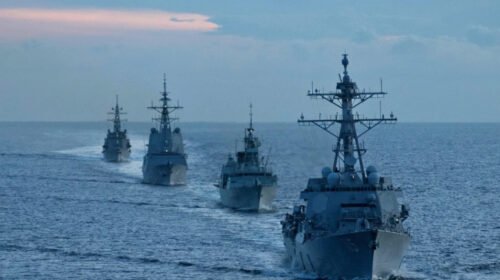
In May 2026, Japan and the Philippines announced the start of work toward the transfer of Abukuma-class destroyers of the Japan Maritime Self-Defense Force (JMSDF) to the Philippines. If realized, this will be the first transfer of lethal defense equipment under the Three Principles on Transfer of Defense Equipment and Technology as revised in April of that year. As Japan and the Philippines mark the 70th anniversary of the normalization of diplomatic relations, the planned transfer of destroyers is among the developments that symbolize the current stage of Japan-Philippines security cooperation, which is advancing rapidly.
This report examines the significance of Japan’s expanding defense equipment transfers to the Philippines in the context of Philippine security policy, as well as what Japan can achieve through these transfers.
Background: The Transformation of Philippine Security Policy and Its Equipment Needs
In recent years, Philippine security policy has been undergoing a period of major transformation and expansion. Since its founding, the Armed Forces of the Philippines (AFP) has treated counterinsurgency operations against domestic communist and Muslim insurgent groups as its primary mission, while relying largely on the presence of U.S. forces under the U.S.-Philippines Mutual Defense Treaty for its external security. As a result, the development of the Philippines’ own naval and air capabilities has long lagged. To take one example, large surface combatants play an important role in patrolling outlying islands and territorial waters. Yet until 2011, when a former U.S. Coast Guard Hamilton-class cutter (approximately 3,250 tons; commissioned in 1967) was acquired from the United States, the Philippine Navy’s largest, and indeed only, ship of this kind had long been a severely outdated Cannon-class destroyer escort (approximately 1,600 tons) commissioned into the U.S. Navy in 1943, during World War II. Likewise, the Philippines had no fighter aircraft from the retirement of its U.S.-made F-5 light fighters in 2005 until the introduction of South Korean-made FA-50 light fighters in 2015.
However, as China’s coercive behavior in the South China Sea has become increasingly routine and the Philippines’ internal security situation has improved, the focus of Philippine security policy has been shifting toward external security. This shift originated under the Benigno Aquino III administration, which decided to move the focus of the AFP’s mission from domestic counterinsurgency to external defense. After a period of stagnation under the Rodrigo Duterte administration, the shift has gathered further pace under the current Ferdinand Marcos Jr. administration. In January 2024, Secretary of National Defense Gilberto C. Teodoro Jr. announced the Comprehensive Archipelagic Defense Concept, which centers on the projection of military power throughout the country’s territory, territorial waters, and exclusive economic zone. Made public at around the same time, Re-Horizon 3, the third phase of the Revised AFP Modernization Program, envisages acquisitions worth about US$35 billion over 10 years, including frigates, submarines, fighter aircraft, land-based anti-ship missiles, and air defense systems.
Against this backdrop, Japan-Philippines security cooperation has also deepened rapidly. The Japan-Philippines Joint Statement issued on President Marcos’s visit to Japan in May 2026 declared the elevation of bilateral relations to a Comprehensive Strategic Partnership (CSP). This is the first CSP the Philippines has entered. Setting aside the United States, which stands in a category of its own as the Philippines’ only formal ally, some observers regard it as the highest-ranking partnership in Philippine foreign relations. The statement also affirmed Japan’s contribution to the capacity building of the AFP and the further promotion of defense equipment transfers.
The Current Stage of Defense Equipment Transfers to the Philippines
Under the Three Principles on Arms Exports of 1967 and the related policy guideline issued by the Miki administration in 1976, Japan long maintained a policy under which the overseas transfer of its defense equipment was, in principle, not permitted. In April 2014, however, the Three Principles on Transfer of Defense Equipment and Technology were adopted, allowing transfers under certain conditions, and the National Security Strategy of December 2022 explicitly called for “promoting transfer of defense equipment and technology.”
Defense equipment has been transferred to the Philippines under the Agreement concerning the Transfer of Defense Equipment and Technology signed in February 2016. Transfers so far include used JMSDF TC-90 training aircraft together with support for their operation, and UH-1H helicopter parts from the Japan Ground Self-Defense Force. In 2023–2024 came the first transfer of newly manufactured complete equipment: fixed (FPS-3ME) and mobile (TPS-P14ME) air surveillance radars manufactured by Mitsubishi Electric. In addition, in November 2023 Japan decided to provide coastal radar systems to the Philippines as the first project under Official Security Assistance (OSA), which had been established in April of that year. The systems were handed over in February 2026.
On April 21, 2026, Japan abolished the five categories (rescue, transport, warning, surveillance, and minesweeping) that had previously restricted defense equipment transfers, making it possible, subject to screening, to transfer any type of defense equipment. Shortly afterward, on May 5, Minister of Defense Shinjiro Koizumi and Secretary Teodoro met in Manila. The two agreed to establish a bilateral working group to examine equipment transfers and signed the Statement by the Defense Ministers of Japan and the Philippines on the Further Promotion of Defense Equipment and Technology Cooperation. On July 7, 2026, Secretary Teodoro revealed that the two countries had reached agreement in substance on the Philippines’ acquisition of five Abukuma-class destroyers. Following their decommissioning from the JMSDF, the ships are expected to be transferred to the Philippine Navy within two to three years. Consultations are also under way on the transfer of additional used TC-90 training aircraft.
Effects of the Equipment Transfers: What Can Japan Achieve?
What, then, can Japan achieve through defense equipment transfers to the Philippines? Japan’s defense white paper describes defense equipment transfer as enhancing “bilateral defense relationships from traditional exchanges to deeper cooperation in a phased manner.” At a press conference in Manila on May 5 concerning defense equipment transfers to the Philippines, Minister Koizumi was asked by a reporter about the importance of equipment exports. He replied that defense equipment transfer is “a key policy instrument for creating a desirable security environment for Japan.” A senior official of the Ministry of Foreign Affairs has also told the media that one aim of defense equipment transfers to the Philippines is to build cooperative ties while the present administration, which is well disposed toward cooperation with Japan, remains in office.
Nevertheless, scholars of arms transfers and alliances, including Andrew J. Pierre and Stephen M. Walt, point out that arms transfers do not necessarily produce the effects the supplier seeks. Their impact depends on a range of conditions, such as the recipient’s degree of dependence, the availability of alternative suppliers, and the degree of operational integration. 16 What effects, then, can be expected from Japan’s defense equipment transfers to the Philippines?
The ultimate effect Japan seeks from these transfers is likely to lie in an indirect benefit: shaping the regional order and the international environment by enhancing the capabilities of the Philippines. Japan has placed the Free and Open Indo-Pacific (FOIP) at the core of its foreign policy, and the current administration of Prime Minister Sanae Takaichi has put forward the Updated FOIP. FOIP’s guiding principle is to maintain a free and open regional order based on the rule of law, and FOIP has been described as a vision that combines two orientations: counterbalancing China and pursuing stability in a region that includes China. The stability of the maritime order in the Indo-Pacific, including the South China Sea, which borders the Philippines, is vital to securing Japan’s sea lanes and is one of Japan’s motives for promoting FOIP.
The Updated FOIP announced by Prime Minister Takaichi in May 2026 introduces multilayered cooperation with like-minded countries, including maritime security cooperation and capacity building, as a new means of achieving its goals. The current equipment transfers to the Philippines can be understood as part of a policy aimed at realizing FOIP. In light of this discussion, the destroyer transfer is expected to help maintain the regional order by enhancing the Philippines’ maritime security and maritime domain awareness (MDA) capabilities, and thereby to advance the ideals of FOIP.
More concretely, how can the destroyer transfer contribute to maintaining the regional order and enhancing the AFP’s capabilities, thereby helping to realize the effects outlined above? The Abukuma class was designed from the outset as a destroyer with limited combat capability, and the ships are now outdated, having been in service for more than 30 years. They are therefore generally inferior in performance to the new South Korean-built frigates that the AFP is currently acquiring. Analysts have pointed out, however, that the procurement plan under Re-Horizon 3 is heavily weighted toward land-based anti-ship missiles and strike systems, and that large maritime assets capable of conducting peacetime patrol and surveillance, responding to gray-zone situations, and operating in distant waters are structurally underrepresented. Indeed, the Philippine Navy’s current inventory of large surface combatants, which would form the core of such assets, consists of only three used Hamilton-class cutters and four new South Korean-built frigates. 23 Under these circumstances, the provision of Abukuma-class destroyers will help fill the AFP’s shortage of large vessels.
Acquiring anti-submarine warfare (ASW) capability will also be an important task for the Philippine Navy in the years ahead. ASW is a field that requires comprehensive proficiency in sonar operation, patrol, and analysis, and possessing the assets alone is not sufficient. The JMSDF, which has cultivated ASW as a core competence since the Cold War, has a high level of expertise in this field. If the Abukuma-class ships were transferred to the Philippine Navy with their ASW equipment retained, they could serve as a foundation for developing the Philippine Navy’s ASW capabilities through education, training, and joint exercises with the JMSDF. By substantially improving the Philippines’ maritime security and MDA capabilities, this strengthening of the AFP should in turn help realize Japan’s FOIP vision of maintaining an international order based on the rule of law.
A second anticipated effect is the deepening of Japan-Philippines relations through equipment transfers. The Philippines is currently diversifying its sources of equipment among the United States, South Korea, Israel, and others, but ASW, as noted above, is one of the fields in which Japan is thought to have a comparative advantage over other suppliers. This not only offers the Philippines an opportunity to enhance its capabilities but could also enable Japan to build closer cooperative relations with the Philippines by drawing on that comparative advantage. Moreover, the Philippines’ operation of Japanese-built combatants should help deepen the Philippines’ working relationships with the JMSDF and Japanese defense companies, laying a foundation for more advanced equipment transfers and co-production in the future. The Philippine Navy has employed a used Pohang-class corvette as a transition and training platform for the introduction of the Jose Rizal-class frigates. In the same way, the Abukuma class, supported by JMSDF education, training, and maintenance assistance, could establish a basis for operating Japanese-built ships and serve as a bridge to the next stage of cooperation, such as co-production and the acquisition of new ships.
Challenges: Limitations and the Sustainability of Policy
Observers have pointed to challenges in the effectiveness of Philippine security policy. Re-Horizon 3 is extremely large in scale, and its feasibility has been questioned in light of the size of the Philippines’ public finances. In fact, from 2014 to 2020 the AFP received only about 40 percent of the programmed funds, and just under 30 percent of the projects were completed. Moreover, for the AFP, which has long treated counterinsurgency as its main mission, the path toward a rapid shift to external security is likely to be difficult. Some also point out that budget allocations still give priority to the Army and to domestic counterinsurgency over the Navy and the Air Force, which are central to external security.
Whether Philippine policy can be sustained across administrations is another challenge. Observers have noted that, depending on the outcome of the 2028 presidential election, current security policy could change or be discontinued. In the Philippines, foreign and security policy tends to swing relatively widely with changes of administration, as illustrated by the turbulence in foreign policy in the early years of the Duterte administration. The effects of equipment provision, however, are considered relatively resilient to such risks. Indeed, studies point out that even under the Duterte administration, which chose a conciliatory line toward China, and under the Gloria Macapagal Arroyo administration, the AFP, the Philippine Coast Guard, and other agencies continued to modernize, and MDA capabilities continued to improve. These efforts, the studies add, contributed to the harder line toward China that followed.
Conclusion
On July 1, 2026, the World Bank reclassified the Philippines, along with fellow ASEAN member Vietnam and others, from lower-middle-income to upper-middle-income status. The Philippine economy has grown at an average annual rate of 5.8 percent over the past five years, and the country’s presence in the region is increasing. With this economic development as a backdrop, the modernization of the AFP and security cooperation with Japan are moving forward.
Although their combat capabilities are limited, the transfer of the used destroyers could help fill the Philippines’ shortage of large vessels while also contributing to stronger Japan-Philippines relations and the realization of FOIP. Looking further ahead, Japan’s potential contributions are likely to lie not only in the provision of more advanced and capable equipment beyond used equipment, but also in the capacity-building assistance in fields such as MDA, ASW, maintenance, and education and training. Manila, too, has shown strong interest in cooperation that goes beyond the transfer of the used destroyers and other recently announced equipment, extending to the purchase of defense equipment and even co-production. Japan-Philippines equipment and defense industrial cooperation has room to deepen beyond the earlier air surveillance radars and the current transfer of used destroyers, in terms of the types of equipment, their quality, and the modalities of cooperation alike.
Relations between Japan and the ASEAN countries, including the Philippines, were long marked by wide gaps in their levels of economic and social development. These gaps, however, are gradually narrowing as the ASEAN countries develop, and this trend is projected to continue. Security is no exception: the security policies of the Philippines and other ASEAN countries are generally becoming more robust. In this international environment, if defense equipment transfers are to remain an effective policy instrument for Japan, it is important to bear in mind that not every transfer will automatically produce the desired effects. With a view to realizing the FOIP vision of a stable regional order, Japan should seek out and promote defense cooperation and equipment transfers that serve the interests of both sides.