
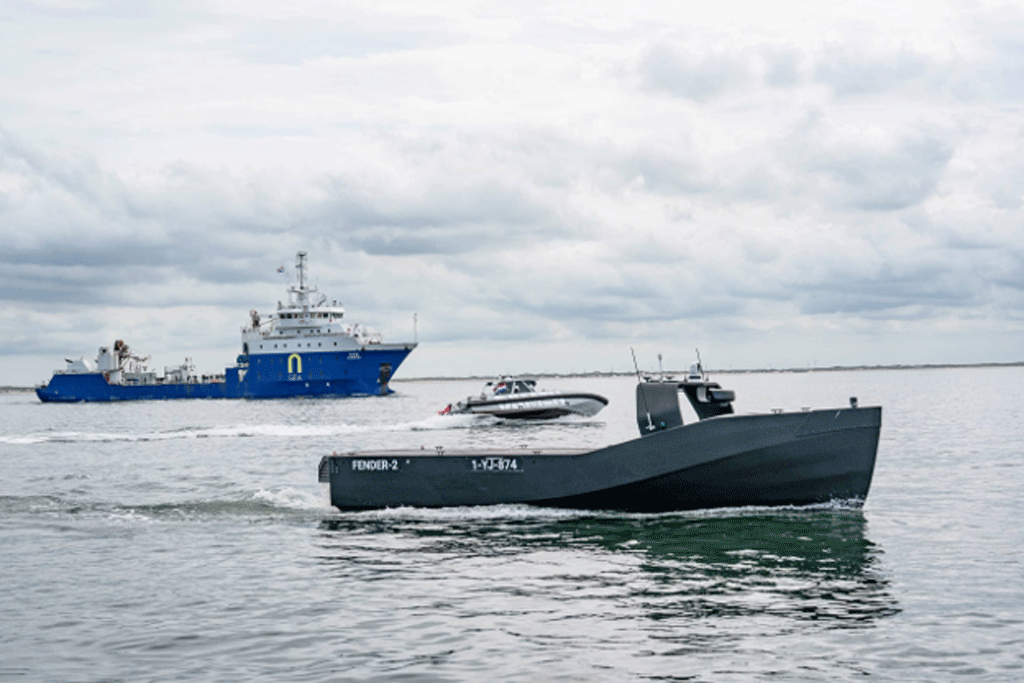
In recent weeks, the North Sea has been the scene of manned and unmanned systems that operated as an integrated whole. During the Maritime Uncrewed Sea Trials (MUST) 2026, elements in the air, on and under water worked together around a command platform. It was the first time that the Navy practiced multi-domain cooperation in this composition.
Around the manned command platform patrol vessel DSS Galatea, drones worked together on operational missions in the air (UAVs), on the water (USVs) and underwater (UUVs). The air, surface and underwater systems were controlled via IDUS (Intelligent Distributed Uncrewed Systems), a command system developed by the Navy for unmanned operations.
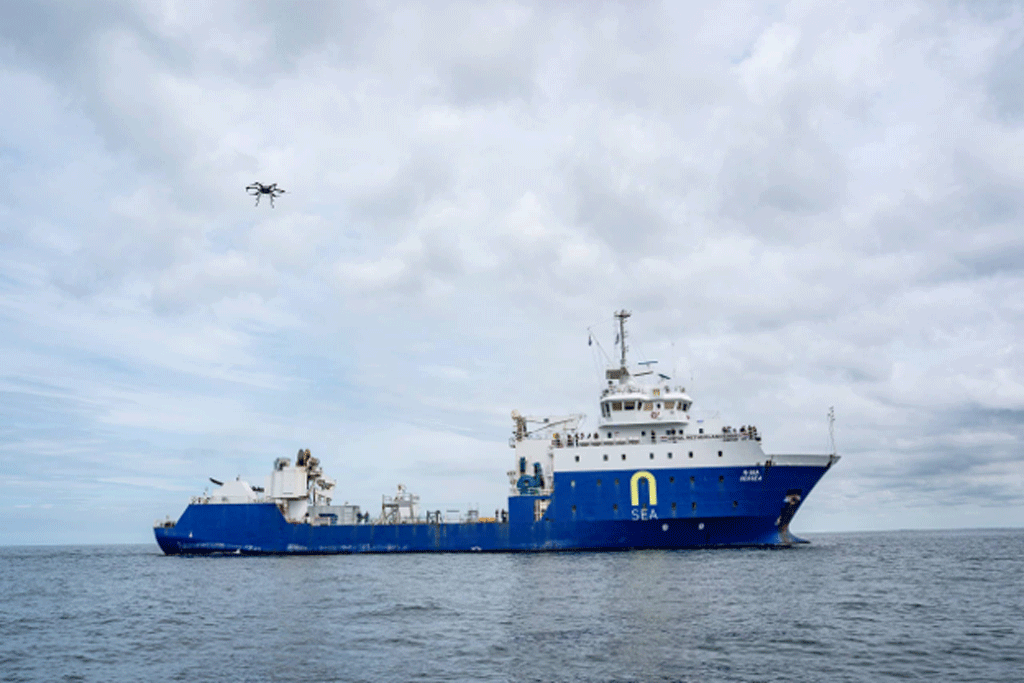
During MUST there were exercises with automatic formation sailing of USVs around patrol vessel Galatea and with a FIND operation. Unmanned aircraft, surface ships and underwater vehicles worked together to locate and track a target. Both exercises show how different unmanned systems reinforce each other and increase the effectiveness of the fleet.
Systems
Various systems were part of the exercise. On the water, 2 specially designed and 3D-printed USVs were used. The unmanned surface ships of 12 meters long were built in 3 months. The navy worked together with Marin (Maritime Research Institute Netherlands) for this. UAVs from the Maritime Drone Team and a V-Bat (reconnaissance drone) from the Defence Helicopter Command flew over the North Sea, while a UUV from Lobster Robotics moved underwater. TNO was also involved in the exercise. By working with these partners, the Navy is accelerating the development and application of innovative technologies for future maritime and amphibious operations.
Innovation with partners
MUST 2026 was the first edition of an annual exercise in which the Navy develops and tests new operational concepts. The results not only contribute to the further development of maritime unmanned capabilities but also feed into international NATO exercises.