
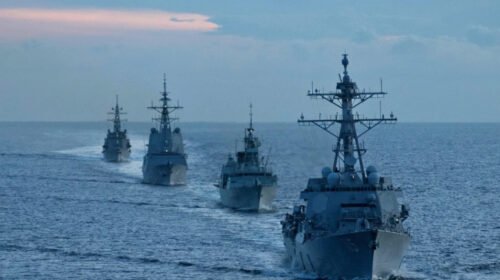
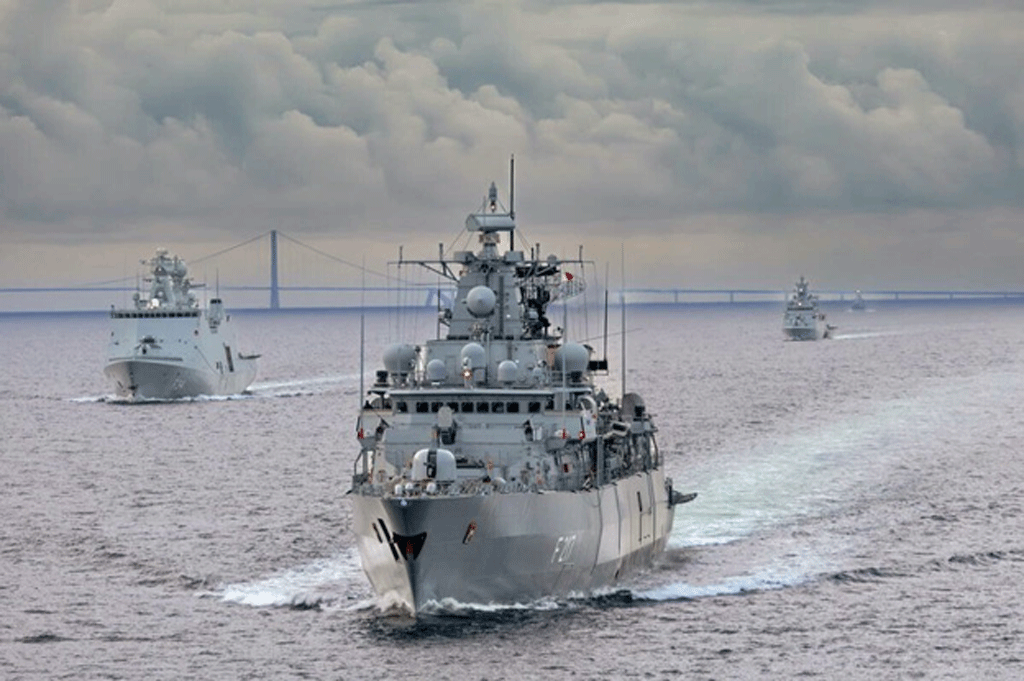
The Baltic Operations (BALTOPS) maneuver starts – this year in Gdynia, Poland. More than 30 units from 15 nations are participating with around 6,000 soldiers.
The annual naval maneuver of NATO partners in the Baltic Sea is led by the US Navy. This multinational exercise lasts about two weeks and is taking place for the 55th time this year. BALTOPS ends at the beginning of Kiel Week in Kiel.
The German Navy participates with the frigate “Sachsen-Anhalt”, the corvettes “Braunschweig” and “Erfurt”, submarine “U 34” and a maritime reconnaissance aircraft P-8A Poseidon. With the Commander Task Force Baltic, the German Navy is once again taking on a leading role. The NATO partners contribute a wide range of capabilities. “All BALTOPS units increase NATO’s presence in the sea area and thus also support NATO’s Baltic Sentry activity. Ships, boats and naval aviators as well as unmanned systems will be used,” said Rear Admiral Stephan Haisch.
BALTOPS is a maritime maneuver designed to ensure free maritime traffic in the Baltic Sea while demonstrating robust deterrence. The scenario is geared to the operational requirements to ensure national and collective defense and to participate in operations, including the fight against international terrorism, in the Baltic Sea.
The joint action of the NATO partners in the Baltic Sea is proof that deterrence and defense can be achieved together in the Alliance. This maneuver is emblematic of a task that goes beyond the Baltic Sea: the joint securing of the entire strategic sea communication lines from the American East Coast to the Baltic States.
History
The BALTOPS series of maneuvers began during the Cold War as part of the U.S. effort to demonstrate its commitment to the security and stability of one of Europe’s two strategic flanks. The means to achieve this: effective multinational maritime-military cooperation. In May 1971, the aircraft carrier USS “Intrepid” sailed into the Baltic Sea together with three destroyers to demonstrate their capabilities. The task force sailed within 20 nautical miles of the Soviet coast and was observed around the clock by Soviet reconnaissance aircraft. At that time, the focus of BALTOPS was on the protection of the Danish islands and straits. NATO naval units were to be able to penetrate the Baltic Sea, while enemy warships were to be denied the opposite route to the North Sea and thus to the Atlantic.