
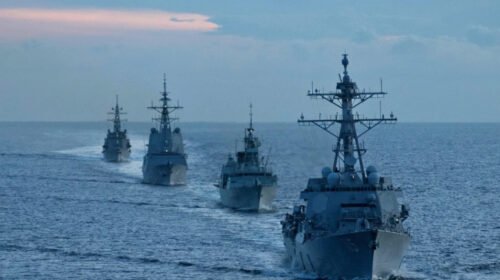
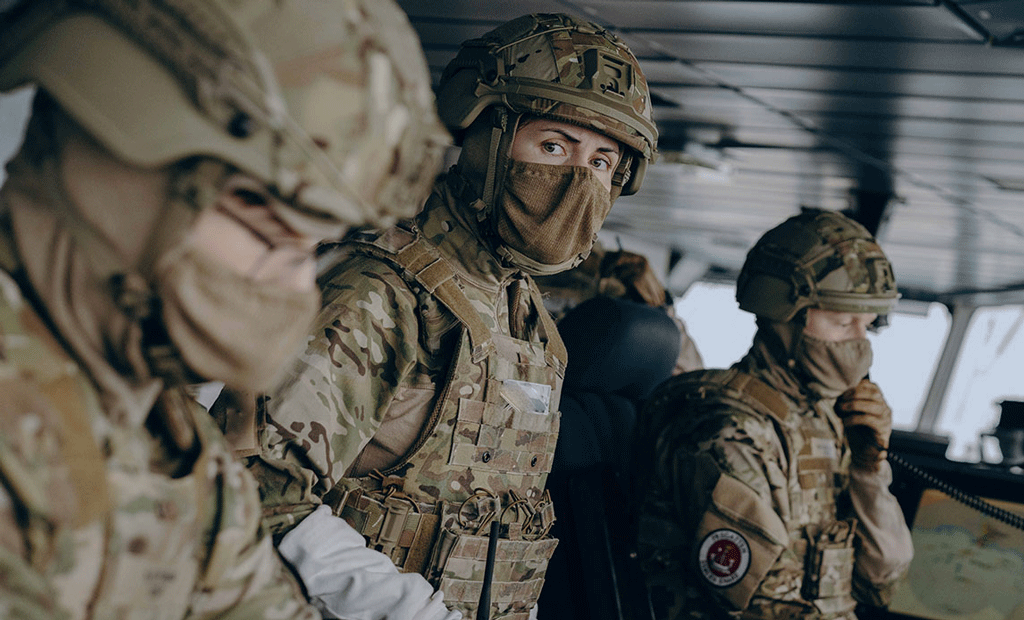
Danish frigate Esbern Snare and its crew have just completed the so-called DOST training. This makes the ship and crew the Navy’s most combat-ready unit now.
“I reckon that we will probably be some of the first to be called if Denmark and the Navy need a naval effort in the near future.”
So says Christian Thiesen, commander, and commander of the Danish frigate Esbern Snare.
The background is that the ship and its crew have just completed the so-called DOST training – which makes the frigate and crew the most combat-ready unit in the Navy.
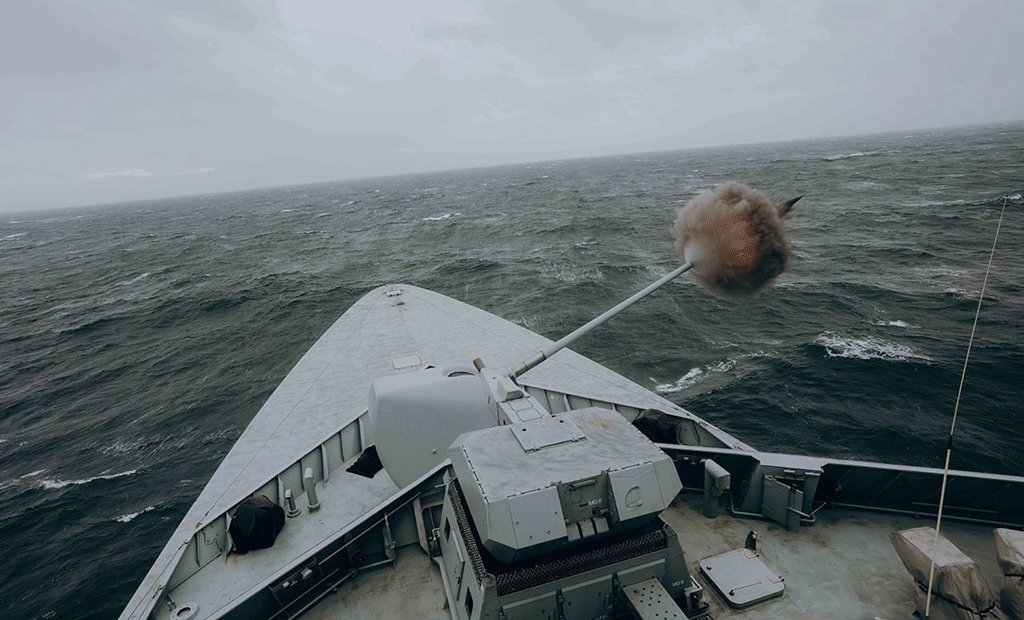
The DOST training consists of a longer course of training under Danish auspices, followed by training at the German Navy’s Accident Investigation School in Neustadt, culminating in a several weeklong course with the British Navy off Plymouth in England. Here, experts train and evaluate the crew’s skills in a wide range of naval disciplines.
“The setup here in England is huge. We are really under pressure and stress on all sides, and a large number of other warships, planes and helicopters participate in the air and even a submarine below the surface of the sea. We are trained in a complex scenario, where all our knowledge and skills are assessed, developed, and evaluated. It is very rewarding, very educational, and enormously useful for us as a ship and crew,” says Christian Thiesen.
The Thursday War
Normally, every year one of the Danish frigates and its crew undergoes the DOST training. Thus, there is at least one frigate crew in the Navy at any given time that has been through the training within the past year.
The final training course in England takes place over several weeks, during which the ship and crew go through a number of training courses, evaluations, and procedural development. Each week’s program culminates every Thursday, when the “Thursday War” is held, and where all the skills and procedures are assessed in full-scale war scenarios.
Here, the ship receives attacks from submarines, planes and other ships while simulating various internal problems. For example, equipment fails, power goes out, rudder strikes and electronics break down. On top of that, a fire breaks out on board, the ship takes in water and crew members are injured and require attention and treatment. All to stress test and, not least, develop the cooperation on board, the procedures, equipment, best practice, etc. in realistic and intense scenarios.
Facts about DOST
DOST stands for Danish Operational Sea Training and takes place under the auspices of FOST (Fleet Operational Standards and Training) at Plymouth in England.
The British Navy and Dutch and German ship crews have been trained here since the 1950s.
In recent years, Norway and Denmark have also joined.
DOST builds on the training that the Navy itself is responsible for at home and follows combat and casualty training at the German Navy’s Accident Investigation School in Neustadt, close to Travemünde.
Internal and external war
All aspects of the so-called inner and outer struggle are thus trained. By internal struggle, we mean challenges such as leakage, fire, wounded, failure of weapon and sensor systems, etc. External combat means the handling of attacks from outside – for example, attacks from other ships, aircraft, drones, and submarines with, among other things, missiles, and torpedoes.
“It can be attacks from both conventional military forces and asymmetric threats such as terrorists. We must be able to manage everything while remaining combat-capable, even if there is water ingress, fire, or system failure, for example,” says Christian Theisen.
“It is quite unique that we can have access to such an advanced and large setup as is offered here. We have other ships on the surface, submarines underwater, and planes and helicopters in the air. A huge setup that evaluates us to the limit and which we otherwise do not have access to,” says Christian Thiesen.
“At the same time, we draw on some very competent experts with years of experience in their fields. It is really something that moves our level and makes us skilled. They coach, train, guide, and evaluate us, and ultimately they assess our efforts to ensure that we have the level required in a sharp situation. I am very grateful for this opportunity for us to develop. I can state with conviction that we are now the Navy’s most combat-ready unit,” says Christian Thiesen.