
. After two days of intensive preparations, including coordination seminars and detailed planning, the Chilean Navy carried out the operational phase of the Submarine Search and Rescue exercise (SUBSAR 2025), deploying its main maritime and air units in an operational area near Coronel.
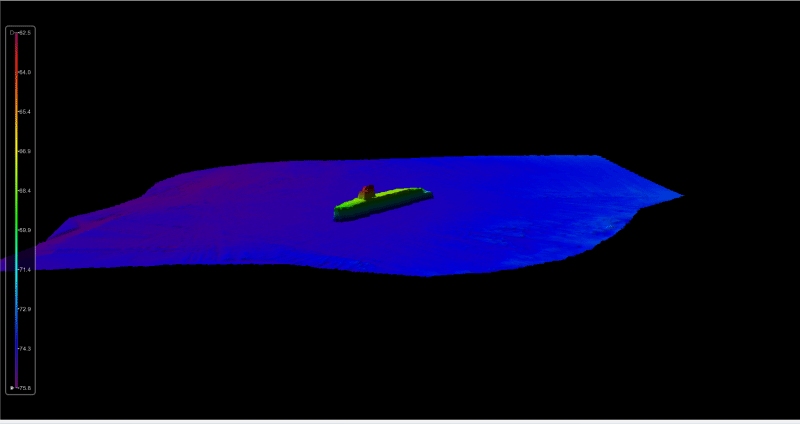
The exercise centered around the submarine “Carrera,” which settled on the seabed at a location unknown to the other participating units, faithfully recreating a real emergency situation.
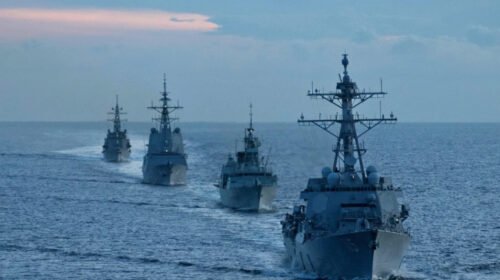
The deployment included a wide range of assets, notably the research vessel “Cabo de Hornos,” the offshore tug “Janequeo,” and the general service launch “Concepción.” They were also supported by the P-295 reconnaissance aircraft from the VP-1 Maritime Aero-Reconnaissance Squadron of the Naval Aviation and an HH-65 helicopter from the Second Naval Zone.
The training exercise also benefited from the valuable participation of specialized teams, including divers from the Navy’s Search and Rescue Command, medical personnel from the Hyperbaric Chamber of the Talcahuano Naval Hospital “Almirante Adriasola,” the Navy’s Hydrographic and Oceanographic Service, and the company Under Deep Solutions.
It is worth noting that the presence of a representative from the International Submarine Rescue and Escape Liaison Officer (ISMERLO) at SUBSAR 2025 reinforces international interoperability and ensures alignment with global standards. Their participation provides an expert perspective and strengthens preparedness for a real emergency.
During the two days of operations, the exercise was executed as follows: deployment and landing of the submarine “Carrera,” search and location phase, initial intervention phase, PODEX (Position of Deployable Equipment), diver intervention, landing, and redeployment.
The success of this operation underscores the high level of readiness of the Chilean Navy, vital to ensuring an effective response to any emergency involving submarines.