
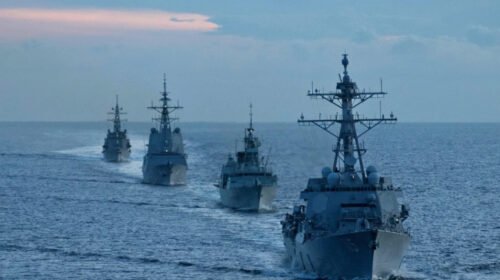
The two large-scale exercises REPMUS (Robotic Experimentation and Prototyping) using Maritime Uncrewed Systems and DYMS (Dynamic Messenger). They are known to only a few, but are more important than ever. They constitute the world’s largest maritime test and experimentation field for unmanned systems, commonly referred to as drones. The German Navy also participated. What happens during these exercises?
New threats such as the sabotage of critical underwater infrastructure, asymmetric attacks on ports, or the increasing use of unmanned systems pose a challenge to NATO and its members face complex new challenges. NATO is preparing for two established large-scale exercises that complement each other: REPMUS using Maritime Uncrewed Systems and DYMS.
Both take place annually off the Portuguese coast near Tróia and Sesimbra and now constitute the world’s largest maritime test and experimentation field for unmanned systems. While REPMUS (Robotic Experimentation and Prototyping using Maritime Uncrewed Systems) focuses primarily on technological testing and prototyping, Dynamic Messenger rehearses the concrete military deployment of such systems. Together, they form a unique experimental cycle that combines innovation with real-world operational experience. In September 2025, the German Navy also participated in both exercises.
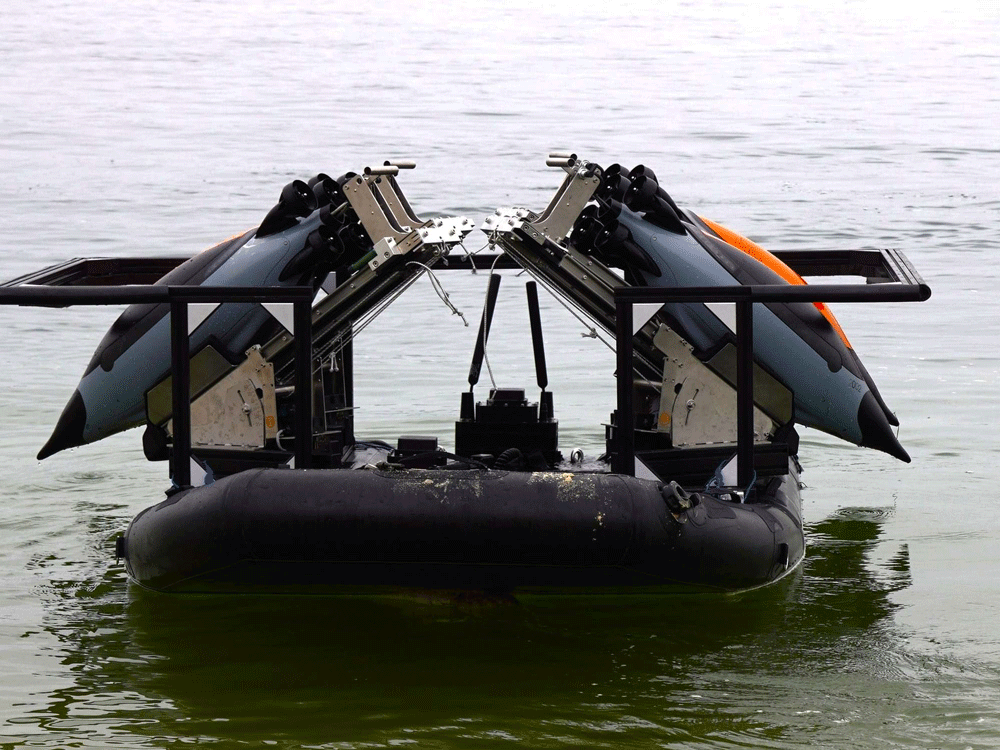
REPMUS (Robotic Experimentation and Prototyping using Maritime Uncrewed Systems) is characterized above all by its technological diversity: Here, armed forces, industry, and academic partners test new prototypes of unmanned systems on land, at sea, and in the air. Naval forces from more than 25 nations, NATO (North Atlantic Treaty Organization) facilities, and numerous research institutes, with a total of 2,500 participants and 250 different systems, regularly take part. This exercise not only examines the performance of individual systems but also their interoperability in complex scenarios – from mine countermeasures and anti-submarine operations to the protection of maritime infrastructure. The exercise is essentially a full-scale “laboratory” where innovative technologies are tested and new boundaries are explored.
Dynamic Messenger builds upon REPMUS (Robotic Experimentation and Prototyping using Maritime Uncrewed Systems) and goes a step further: It tests how unmanned systems can actually be integrated into maritime operations. Therefore, Standing NATO North Atlantic Treaty Organization Maritime Group 1, one of the alliance’s two naval task forces, is also participating in Dynamic Messenger. The exercise creates a flexible framework in which new concepts are dynamically tested, adapted, and immediately evaluated. This approach, known as Operational Experimentation, has many advantages.
Firstly, it enables the rapid validation of new technologies. Systems that were previously tested in the laboratory as prototypes are deployed in realistic situations. This immediately reveals whether sensors, control software, or communication interfaces meet the operational requirements. Instead of waiting for lengthy development cycles, adjustments can be made quickly – a crucial advantage given the rapid pace of technological advancements.
Secondly, this approach promotes interoperability. In multinational operations, different platforms must be able to interact seamlessly. Operational experimentation at DYMS Dynamic Messenger creates an environment in which not only technical interfaces are tested, but also procedures and doctrines are aligned. The interaction of manned and unmanned units of varying sizes, in particular, gives rise to new tactics that could hardly be developed without such an open-ended testing environment. The flexible scenario design of the exercise series allows for the realistic simulation of new challenges, such as those related to port security.
Both exercises strengthen cooperation between the military, industry, and research. While REPMUS Robotic Experimentation and Prototyping using Maritime Uncrewed Systems serves as a showcase for innovative technologies, Dynamic Messenger enables the validation of these innovations in practical scenarios. This creates a direct transfer of knowledge: Companies and universities receive immediate feedback from military users, while the armed forces gain early insights into emerging technologies. This collaboration significantly accelerates innovation cycles.
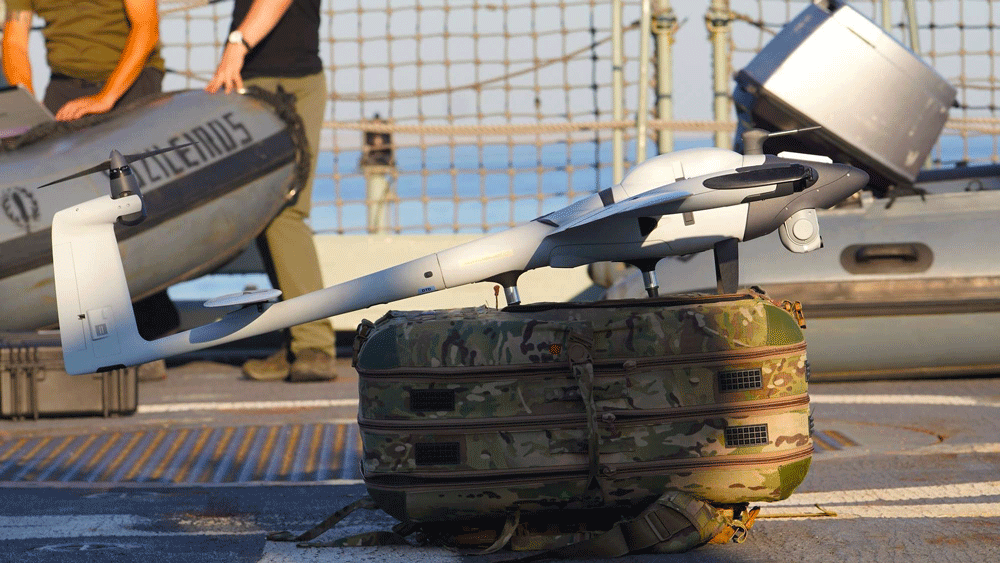
Newly developed unmanned systems are becoming increasingly smaller and more efficient. This drone is transported and launched on a backpack.